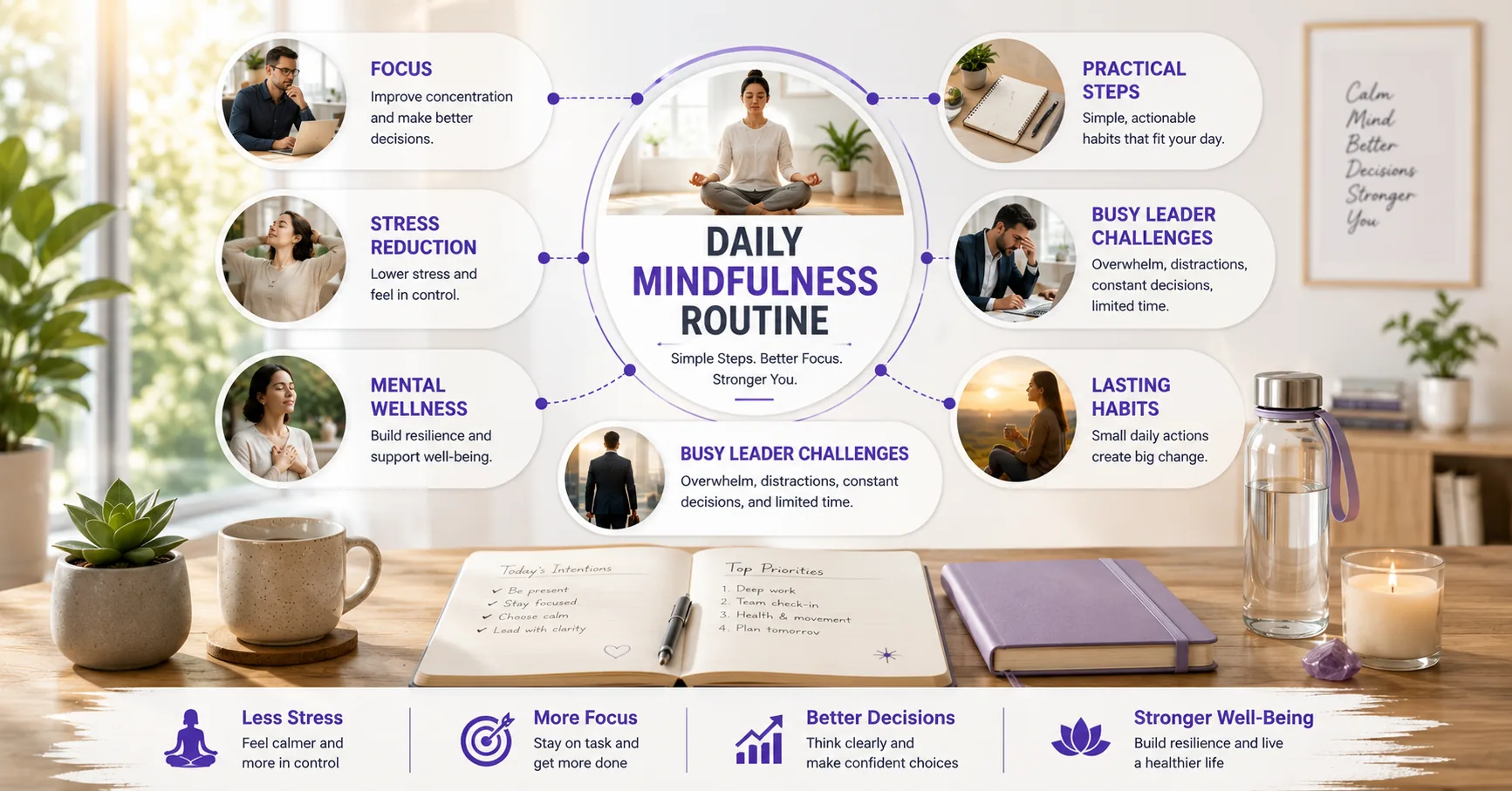
Learn a practical, science-backed daily mindfulness routine designed for busy leaders to improve focus, reduce stress, and build lasting mental wellness habits. This article provides actionable steps including meditation, journaling, and mindful movement to integrate mindfulness effectively into your daily workflow.
Introduction: Why a Daily Mindfulness Routine Matters for Busy Leaders
If you are a founder, product owner, or operations lead, you have likely felt how stress and constant context switching can erode your focus. Building a daily mindfulness routine is not just a trend—it is a practical, science-backed way to protect your mental clarity and resilience, even with a packed calendar.
The challenge? Most busy leaders want the benefits of mindfulness but cannot spare an hour for meditation or journaling every day. The good news is you do not need to. Research and guides like this daily meditation routine show that small, consistent habits—think five minutes of meditation, a quick reflection, or mindful movement—can make a real difference when done regularly.
This article delivers a step-by-step daily mindfulness routine designed for decision-makers who want results, not fluff. You will get actionable strategies for meditation, mindfulness journaling, and movement, plus tips on using personal growth tools to make these habits stick. We will also share lessons from the Mindway EAP platform and clarify when to DIY or seek expert support.
If you are looking to build more effective routines or automate your workflow, check out our Affordable Workflow Automation Software Options for Startups or contact Prompt Gurru for tailored support.
Understanding Mindfulness and Its Benefits for Mental Wellness
Mindfulness is the practice of paying deliberate, non-judgmental attention to the present moment. For busy founders and operations leaders, a daily mindfulness routine is more than just a wellness trend—it’s a practical tool for improving focus, reducing stress, and building mental resilience. Research consistently shows that regular mindfulness practice can help regulate emotions, sharpen concentration, and lower anxiety, making it a valuable habit for anyone managing high-stakes decisions or complex teams.
At its core, mindfulness works by training your brain to notice thoughts and sensations without immediately reacting. This simple shift can interrupt stress cycles and create space for better decision-making. According to guides like How to Meditate Daily: A Simple Routine To Build Consistency, even short, consistent sessions can yield lasting benefits. Over time, these habits help leaders respond to challenges with greater clarity and less reactivity.
Mindfulness isn’t limited to meditation. Techniques such as mindful movement (like Tai Chi walking) and guided journaling also support mental wellness by grounding attention and encouraging reflection. Studies and practitioner guides highlight that these activities can reduce burnout and improve overall well-being, especially when integrated into a daily routine.
For decision-makers, the real value of mindfulness lies in its impact on performance and team culture. Leaders who prioritize mental wellness habits often report better problem-solving, more effective communication, and a healthier work environment. To see how these concepts connect to workflow and automation, check out our related post on AI Chatbots and Lead Qualification Workflow Automation for Agencies and Growth Teams in 2026.
Core Components of an Effective Daily Mindfulness Routine
For founders and operations leaders, a daily mindfulness routine only works if it fits into real schedules and delivers results without adding stress. The most reliable routines combine four practical components: meditation, mindfulness journaling, mindful movement, and habit tracking. Each supports mental wellness in a different way, and together they create a foundation for focus and resilience.
- Meditation Routine: Short, consistent meditation sessions (even 5 to 10 minutes) help reset your mind before work or after meetings. The key is to start small and make it a non-negotiable part of your day, whether you use a simple timer or a guided app. For a practical approach, see this guide on building a daily meditation habit.
- Mindfulness Journaling: Taking a few minutes to jot down thoughts, intentions, or gratitude helps process emotions and track progress. Guided mindfulness journals offer prompts to keep your practice focused and actionable. Explore these recommended mindfulness journals for inspiration.
- Mindful Movement: Gentle movement practices like Tai Chi walking, yoga, or a slow-paced walk between meetings can ground you in the present. Mindful movement connects breath, posture, and awareness—no gym required. Learn more in this Tai Chi walking overview.
- Habit Tracking and Personal Growth Tools: Simple trackers (digital or paper) reinforce consistency and highlight patterns. Many professionals use habit apps or a daily checklist to keep their mindfulness practice visible and on track. For practical growth tools, check out this guide to personal growth tools.
The beauty of this approach is flexibility: you can tailor the duration and order to fit your schedule, whether you’re at your desk or on the move. Even five-minute blocks, repeated daily, can make a measurable difference in mental clarity and stress management. For more ways to automate healthy routines, see our article on how to automate lead follow-up to boost sales efficiency.
Step 1: Starting with Short, Consistent Meditation Sessions
Building a daily mindfulness routine starts with one of the most effective habits: short, consistent meditation sessions. If you are a founder or operations lead with a packed schedule, the key is to keep it simple and repeatable. Aim for just 3 to 5 minutes each morning or evening—enough to build the habit without overwhelming your day.
- Pick a set time: Attach your meditation to an existing routine, like after your morning coffee or before shutting down your laptop at night. Consistency matters more than duration in the early stages.
- Choose a quiet spot: Find a space where you will not be interrupted. This could be a corner of your office, a balcony, or even your parked car before heading into work.
- Use a simple technique: Start with basic breath awareness. Sit comfortably, close your eyes, and focus on the sensation of your breath moving in and out. When your mind wanders (it will), gently bring your attention back to your breath—no judgment.
- Set a timer: Use your phone or a meditation app to keep sessions short and remove the urge to check the clock. Popular apps like Headspace offer guided sessions for beginners.
- Track your streak: Mark each completed session on a calendar or in a habit tracker. Visual progress helps reinforce your new mindfulness practice.
According to this practical guide on daily meditation, small, repeatable habits are what create lasting mental wellness. You do not need to block off 30 minutes—just show up for a few minutes each day and let consistency do the heavy lifting. As you get comfortable, you can gradually extend your meditation routine or explore new techniques.
If you are interested in how automation and habit tracking can support your mental wellness habits, check out our AI Automation Tools for Small Business 2026 article for practical workflow ideas.
Step 2: Incorporating Mindfulness Journaling for Reflection and Growth
Mindfulness journaling is a practical way for busy leaders to slow down, process thoughts, and build sustainable mental wellness habits. By setting aside just five to ten minutes daily, you can reflect on your experiences, track emotional patterns, and clarify what matters most. This simple act of writing helps anchor your mindfulness practice, making it easier to notice stress triggers and celebrate small wins.
There are several ways to approach mindfulness journaling. Some prefer free-form writing, jotting down whatever comes to mind after a meditation session. Others use structured prompts, such as "What am I grateful for today?" or "What did I notice about my mood this morning?" Guided journals can be especially helpful if you want a bit more direction. According to this review of guided mindfulness journals, the best options are designed with intention and support real growth, not just aesthetics.
For founders and operators, consider using a journal that fits your workflow—digital apps, simple notebooks, or even a section in your daily planner. The key is consistency. If you need inspiration, personal growth tools and journaling prompts can help you get started and keep your practice fresh. Over time, these short reflections can reveal patterns in your thinking, help you manage stress, and support better decision-making.
Mindfulness journaling is not about perfection. It is about building a habit of self-awareness and growth. If you are evaluating whether to build your own digital journaling tool or integrate existing solutions into your team's workflow, check out our post on when to hire custom software vs buy SaaS tools for practical guidance.
Step 3: Adding Mindful Movement Practices Like Tai Chi or Walking
Mindful movement is a cornerstone of any daily mindfulness routine, especially for leaders who spend long hours at a desk or in meetings. Practices like Tai Chi, mindful walking, or gentle stretching combine physical activity with intentional awareness, helping you reconnect with your body and reduce stress. Unlike traditional workouts, mindful movement focuses on slow, deliberate actions and breath, making it accessible even on the busiest days.
One of the most approachable mindful movement practices is Tai Chi walking. This technique emphasizes posture, balance, and relaxed breathing, and can be done in a small office or outdoor space. According to the Tai Chi for Health Institute, the key is to walk slowly and pay attention to each step, syncing your breath with your movement. Even five minutes of Tai Chi walking can help clear mental fog and restore focus.
Mindful walking is another practical option. Simply step away from your screen and walk at a natural pace, noticing the sensations in your feet, legs, and surroundings. If you manage a team or run a business, consider starting meetings with a two-minute mindful walk to reset energy and attention. This habit can be especially helpful for those managing chronic pain or stress, as highlighted in chronic pain daily routine guides.
To make mindful movement a consistent part of your mental wellness habits, schedule it right after a meeting or before lunch. Keep it simple—no special gear required. Over time, these micro-breaks can boost resilience, reduce tension, and support your overall mindfulness practice. For more on integrating movement and mindfulness, see our guide to daily routine management for chronic pain.
Step 4: Using Habit Trackers and Personal Growth Tools to Build Consistency
One of the biggest challenges for founders and operations leaders is not just starting a daily mindfulness routine, but actually sticking with it. This is where habit trackers and personal growth tools make a real difference. By tracking your mindfulness practice—whether it is meditation, journaling, or mindful movement—you create visible proof of your progress and reinforce mental wellness habits over time.
Habit trackers can be as simple as a paper checklist, a spreadsheet, or a dedicated app. Digital options like Habitica and Streaks are popular for their reminders and gamified streaks, while some leaders prefer a mindfulness journal with a built-in habit grid. The key is to choose a format you will reliably use. According to this guide on personal growth tools, even basic tracking or prompts can help turn good intentions into consistent action.
To make your daily mindfulness routine sustainable, set a clear, achievable goal—such as meditating for five minutes every morning or journaling three times a week. Log each session, and review your tracker weekly to celebrate wins and spot any patterns. For inspiration on mindfulness journals designed for daily practice, check out these recommended journals.
Tip: Pair your habit tracker with a two-minute weekly reflection. Note what worked, what slipped, and what you want to adjust. This small step boosts self-awareness and helps your mental wellness habits stick.
If you want to integrate habit tracking into your team’s workflow or need a custom solution, Prompt Gurru can help design and build digital tools that support your goals. For tailored advice or to discuss a digital wellness platform, book a discovery call.
Common Pitfalls and How to Avoid Them
Building a daily mindfulness routine sounds simple, but most busy leaders hit a few familiar roadblocks. Here are three of the most common pitfalls—and how to sidestep them so your mindfulness practice actually sticks.
- Inconsistency: Many people start strong but struggle to keep up daily sessions, especially when work ramps up. The solution? Start with short, manageable practices—just five minutes of meditation or mindful movement each morning. As this guide on building a daily practice points out, small, repeatable habits are far more sustainable than big, sporadic efforts. Set a recurring calendar reminder or use a habit tracker to reinforce your new routine.
- Unrealistic Expectations: Expecting instant calm or dramatic results can lead to frustration and giving up. Mindfulness is about gradual improvement, not overnight transformation. Journaling your progress—even noting minor wins—can help you see growth over time. For inspiration, check out these mindfulness journals designed for daily reflection and realistic goal-setting.
- Distraction and Multitasking: Trying to meditate or reflect while checking email or notifications undermines the entire process. Protect your mindfulness window by silencing devices and choosing a quiet spot. If you find your mind wandering, gently bring your attention back—this is part of the practice, not a failure. For more tips on building focus, see practical personal growth tools that help turn intentions into habits.
Staying aware of these pitfalls—and having a plan to address them—will help you build a daily mindfulness routine that actually works. If you want to automate reminders or integrate mindful check-ins into your workflow, see our article on how to automate lead follow-up for practical automation ideas that apply to personal habits too.
Case Study: Mindfulness Practices Inspired by Mindway EAP Platform (Illustrative Example)
For leaders searching for a daily mindfulness routine that actually works, it's helpful to see how real platforms approach the challenge. The Mindway EAP platform (illustrative example) was designed for busy professionals who need practical, science-backed wellness habits that fit into demanding schedules.
Mindway's approach starts with short, guided meditation sessions—often just 5 to 10 minutes—making it easy for users to build consistency without feeling overwhelmed. The app includes a library of audio meditations and breathing exercises, allowing users to select routines that match their energy and focus needs each day. This mirrors advice from practitioner guides that stress the value of small, repeatable habits for long-term results.
Beyond meditation, Mindway integrates mindfulness journaling prompts and mood check-ins, encouraging daily reflection and personal growth. These features align with research-backed recommendations for journaling as a tool to deepen self-awareness and track progress, as highlighted in external wellness journals. Mindway also nudges users to try mindful movement—such as gentle stretching or walking—directly within the app, recognizing that movement can be as important as stillness for stress reduction.
For founders and operations leaders, the key lesson from Mindway is to keep routines simple, flexible, and trackable. The platform's built-in reminders and habit tracking help users stay accountable, while its modular design lets each person personalize their routine. If you're considering building or customizing a mindfulness solution for your team, reviewing Mindway's patterns is a strong starting point. See more examples in our portfolio case studies or contact us for a discovery call about your mental wellness goals.
DIY vs Hiring a Mindfulness Coach or App: What Works Best for You?
Choosing between a self-guided daily mindfulness routine and professional support comes down to your goals, schedule, and preferred learning style. Many leaders start with DIY mindfulness practices—using free online guides, books, or habit trackers—to build consistency at their own pace. This approach offers flexibility and zero ongoing cost, but it requires discipline and self-reflection to stay on track. For practical tips on building habits that stick, see this simple meditation routine guide.
On the other hand, hiring a mindfulness coach or subscribing to a meditation app like Headspace can accelerate your progress. Coaches provide personalized feedback and accountability, which is especially valuable if you struggle to maintain a mindfulness practice solo. Apps offer guided sessions, reminders, and structured programs—helpful for busy professionals who want expert content without the cost of 1:1 coaching. Many apps also include mindfulness journaling and movement routines, making it easier to cover all aspects of mental wellness habits.
Cost is a key factor: DIY routines are free aside from optional journals or books, while apps typically charge a monthly or annual fee, and coaches may bill hourly or per package. Effectiveness depends on your motivation and the level of support you need. If you want a tailored approach or have specific mental wellness goals, professional help can be worth the investment. For most founders and ops leads, starting with a structured DIY routine and layering in an app or coach as needed is a practical path. If you need help integrating mindfulness into your workflow or want to build a custom digital routine for your team, contact Prompt Gurru for a discovery call. For a broader look at when to build custom solutions versus buying off-the-shelf tools, check out When to Hire a Custom Software Developer vs Buying SaaS Tools.
Conclusion and Next Steps: Integrate Mindfulness into Your Daily Workflow
Building a daily mindfulness routine is less about finding extra hours and more about weaving proven habits into your existing schedule. Start with short, consistent meditation sessions—just a few minutes daily can make a difference, as outlined in this practical guide. Add mindfulness journaling to reflect and track your growth, and experiment with mindful movement like walking or Tai Chi. For those interested in movement-based mindfulness, Tai Chi walking offers a gentle, accessible entry point.
To keep your daily mindfulness routine on track, consider using habit trackers or digital tools that fit your workflow. Many leaders find that integrating these steps leads to greater focus and resilience, even on the busiest days. If you want more inspiration for mindfulness journaling, see these guided journal options.
The most effective mindfulness practice is the one you can sustain. If you want help designing a routine that fits your work and team, Prompt Gurru can help you implement digital mental wellness habits that actually stick. Contact us or book a free discovery call to explore how we can support your journey to consistent mental wellness.
FAQ
How much time does a daily mindfulness routine take?
Most busy professionals can start seeing benefits from a daily mindfulness routine in as little as 10 to 20 minutes per day. A simple structure might include 5 minutes of meditation, 5 minutes of mindfulness journaling, and a short mindful movement practice like walking or stretching. Consistency matters more than duration—building a regular habit is key. For more details on fitting meditation into your schedule, see our How to Meditate Daily article or explore this practical guide.
Can mindfulness improve work performance?
Yes, a daily mindfulness routine can support better focus, lower stress, and improved decision-making—outcomes that directly impact work performance. Research and practitioner experience show that regular mindfulness practice helps leaders respond more calmly to challenges and maintain mental clarity throughout the day. Mindful movement, such as Tai Chi walking, is also shown to reduce tension and boost energy, making it easier to handle demanding work. Many founders and product owners report that even brief mindfulness breaks help them reset and stay productive.
What are the best journals for mindfulness?
The best mindfulness journals are designed with prompts that encourage daily reflection and self-awareness. Look for journals that offer guided questions, space for gratitude, and easy habit tracking. Some popular options are covered in our 9 Guided Mindfulness Journals for Daily Practice roundup and in this external review. Digital tools and personal growth apps can also help turn journaling into a sustainable mental wellness habit. For more on building consistent routines, see these personal growth tools.
About the Author
Prompt Gurru Team brings over 10 years of experience in AI automation, custom software, and wellness platform development for startups and SMEs worldwide. Our studio specializes in building digital products that support mental wellness, productivity, and business growth.
We have delivered 50+ successful projects across industries, including Mindway (a mental wellness and EAP platform), Max Invoice, Max HR, holo, and Wahy Institute. Our solutions are trusted by founders and operations leaders in more than 25 countries, and our apps are live on Google Play, the App Store, and the web.
If you are exploring a mindfulness or wellness platform, or want to integrate digital mental wellness routines into your product, see our portfolio or contact us for a discovery call.
Ready to automate your business?
We build n8n workflows, AI pipelines, Flutter apps, and custom software for startups and SMEs - like the system that powers this blog.
Book a free discovery call