
Discover the most effective AI automation tools for small businesses in 2026, with actionable advice on selecting, implementing, and scaling solutions for real operational impact. This guide covers workflow orchestration, marketing automation, reputation management, and more—backed by real-world case studies and practitioner insights.
AI automation has rapidly evolved from a competitive advantage to a necessity for small businesses. In 2026, the landscape is defined by powerful, accessible tools that enable even the smallest teams to automate complex workflows, streamline operations, and drive growth. Business owners and technical leads now face a critical question: how can they leverage the latest AI automation tools to maximize efficiency, reduce costs, and stay ahead of the curve? This comprehensive guide unpacks the top AI automation solutions for small businesses, offering hands-on advice, real-world case studies, and a clear roadmap for implementation and scaling.
The Evolving Landscape of AI Automation for Small Businesses in 2026
The year 2026 marks a turning point for AI automation in the small business sector. Generative AI, workflow orchestration, and hyperautomation are no longer reserved for large enterprises. Instead, SMBs are embracing these technologies to solve persistent challenges: time constraints, limited IT resources, and the need for scalable solutions that grow with their business. The rise of low-code and no-code platforms has democratized access, allowing non-technical staff to build and manage automations with minimal training.
Compared to previous years, AI automation in 2026 is characterized by AI-native tools that integrate seamlessly with existing business systems. Market research indicates that over 60% of small businesses have adopted at least one AI-driven automation tool, with ROI benchmarks showing average productivity gains of 30% and cost reductions of 20% within the first year. Sectors such as e-commerce, professional services, HR, and marketing are leading the charge, leveraging AI to automate everything from customer engagement to inventory management.
Moreover, the integration of AI with IoT devices and cloud computing has enabled SMBs to collect and analyze data in real time, leading to smarter decision-making and proactive operational adjustments. For example, retail businesses use AI-powered sensors to monitor foot traffic and optimize staffing schedules dynamically. This convergence of technologies is creating new opportunities for small businesses to compete on a global scale with agility and precision.

Core Categories of AI Automation Tools for SMBs
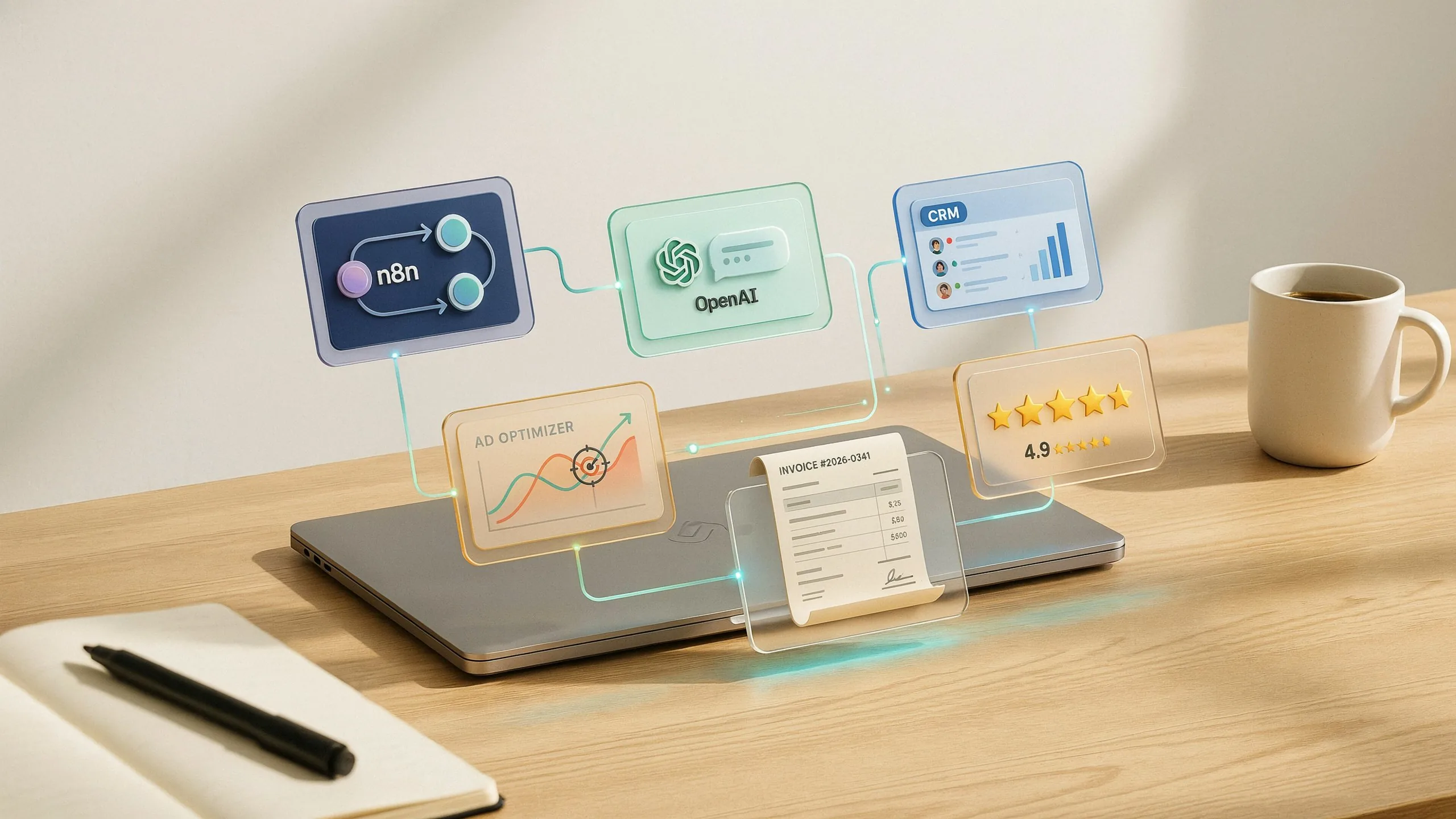
AI automation tools for small businesses fall into several core categories, each addressing specific operational needs. Workflow orchestration platforms like n8n empower SMBs to connect disparate systems, automate repetitive tasks, and orchestrate complex processes—whether self-hosted for full control or cloud-based for ease of deployment. Content generation and chatbot platforms, including OpenAI's GPT-4 and GPT-5, enable businesses to automate customer support, marketing copy, and internal documentation with human-like fluency.
CRM automation tools now feature AI-powered lead scoring, follow-up reminders, and predictive analytics, streamlining sales and customer management. Marketing automation platforms, such as Prompt Gurru’s Facebook Ad Optimizer, leverage AI to optimize ad spend and campaign performance. Review and reputation management solutions like ReviewPilot automate review collection, response, and sentiment analysis. Finally, accounting and finance automation tools tailored for SMBs handle invoicing, expense categorization, and payment reminders, freeing up valuable time for business owners.
In addition to these categories, emerging AI tools focus on specialized functions such as AI-driven recruitment platforms that screen candidates using natural language processing and predictive analytics, reducing hiring biases and accelerating the recruitment cycle. Inventory management solutions now incorporate demand forecasting powered by machine learning, helping SMBs maintain optimal stock levels and reduce waste. Customer experience platforms integrate sentiment analysis and personalized recommendations to enhance engagement and loyalty.
Furthermore, AI-powered virtual assistants are becoming increasingly popular among SMBs, handling scheduling, email triage, and task management. These assistants learn user preferences over time, improving efficiency and allowing staff to focus on higher-value activities. The diversity and specialization of AI automation tools in 2026 enable small businesses to tailor solutions precisely to their unique operational challenges.
Evaluating and Selecting AI Automation Tools for Your Small Business
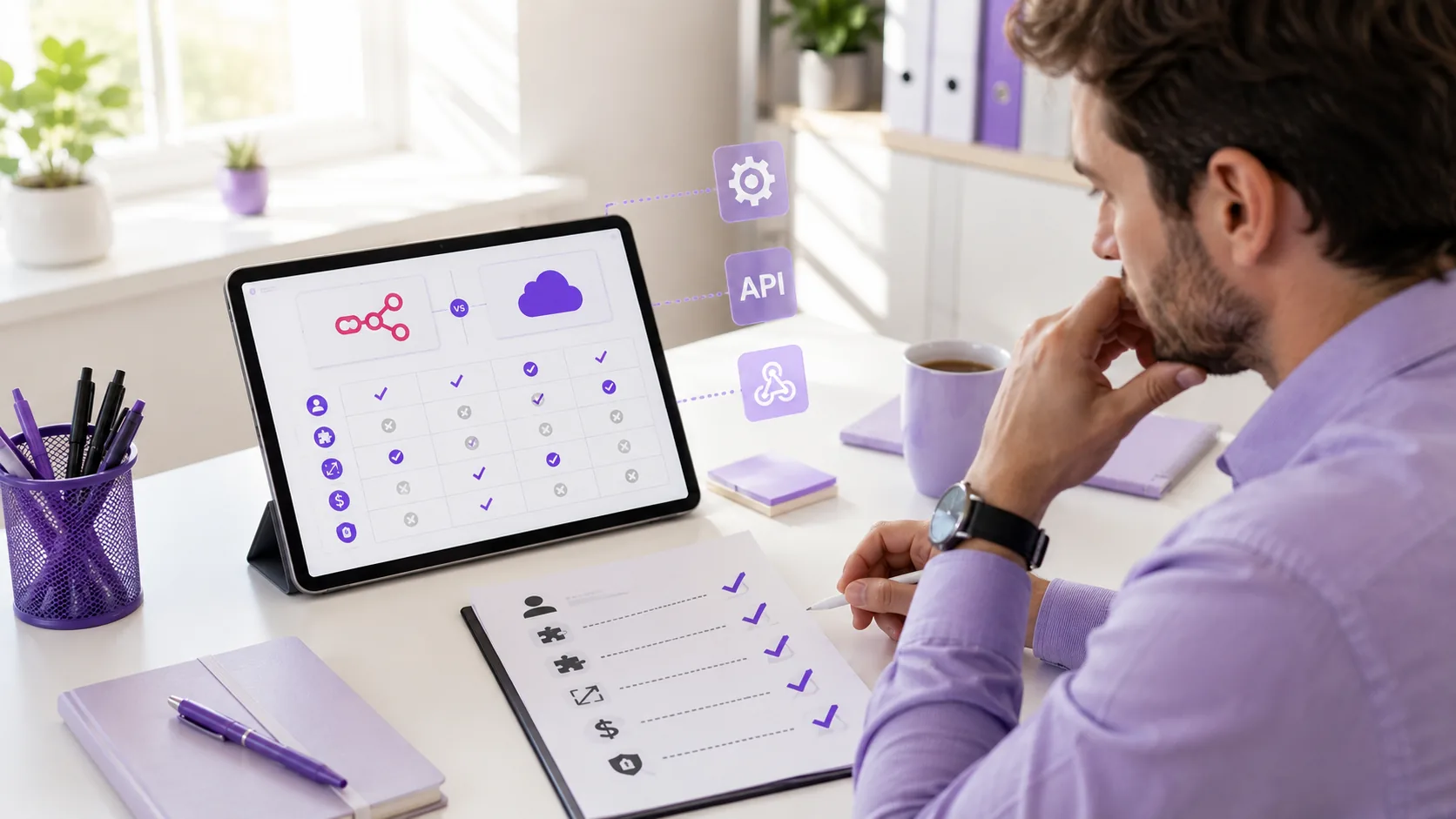
Selecting the right AI automation tools requires a careful evaluation of several criteria: ease of use, integration capabilities, scalability, cost-effectiveness, and security. For small businesses with limited technical resources, low-code platforms and managed services are often preferable, while tech-savvy teams may opt for self-hosted solutions with greater customization.
It’s essential to assess vendor transparency regarding AI model usage and data privacy compliance—especially with evolving regulations. API availability and webhook support are critical for building custom workflows and ensuring interoperability. For example, Prompt Gurru often recommends n8n for workflow orchestration due to its open-source nature, robust integration library, and flexibility. However, businesses must weigh the trade-offs between self-hosting (greater control, higher maintenance) and cloud-based solutions (lower overhead, potential vendor lock-in).
When evaluating tools, consider the total cost of ownership beyond initial licensing fees. This includes implementation time, training requirements, ongoing support, and potential costs associated with scaling. User community size and vendor support responsiveness can also be decisive factors, as they impact the speed of troubleshooting and feature adoption. Additionally, pilot testing tools in a controlled environment helps validate their fit with existing workflows and business goals.
Practitioner Tip: "Always request a live demo and test integration with your existing systems before committing to a new automation tool. This minimizes surprises and ensures a smoother rollout."
Designing and Implementing AI Automation Workflows with n8n
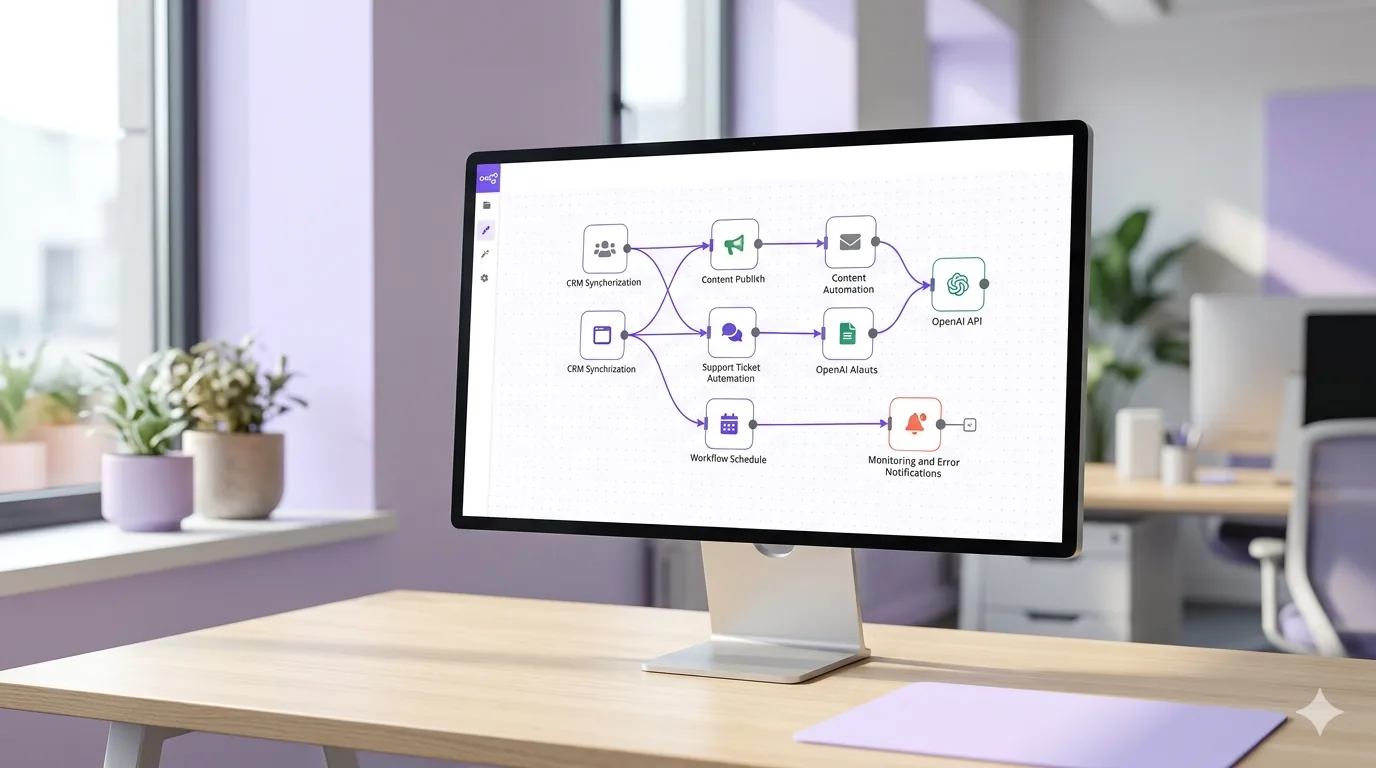
Building effective automation workflows starts with a clear understanding of your business processes and pain points. With n8n, small businesses can orchestrate tasks such as syncing CRM data, automating content publishing, and handling customer support tickets. A typical implementation begins by mapping out the workflow, identifying trigger events (e.g., new lead, incoming email), and defining the sequence of automated actions.
Integrating OpenAI APIs within n8n allows for dynamic content generation—such as drafting personalized emails or generating knowledge base articles on the fly. Scheduling workflows can be managed via cron jobs for recurring tasks or event-based triggers for real-time automation. Monitoring and error handling are crucial: n8n provides built-in logging, alerting, and retry mechanisms to ensure reliability. Prompt Gurru’s client projects have shown that well-designed n8n workflows can save 10–20 hours per week per employee, with measurable improvements in response times and customer satisfaction.
To maximize the benefits of n8n, businesses should adopt an iterative approach to workflow design. Start with automating high-impact, repetitive tasks and gradually incorporate more complex processes. Leveraging n8n’s extensive node library, businesses can integrate with popular services such as Slack, Google Sheets, and Shopify, creating end-to-end automation pipelines. Additionally, n8n’s visual workflow editor simplifies collaboration between technical and non-technical team members, fostering shared ownership and continuous improvement.
Security best practices during implementation include restricting access to sensitive workflows, encrypting credentials, and regularly updating the n8n instance to patch vulnerabilities. Combining these practices with robust testing ensures that automation workflows run smoothly without disrupting critical business operations.
Case Studies: Real-World AI Automation Implementations for SMBs
Prompt Gurru’s portfolio showcases the transformative impact of AI automation across diverse SMB sectors. The Facebook Ad Optimizer automates campaign optimization, reducing cost-per-click by up to 25% and increasing ROI through continuous AI-driven adjustments. ReviewPilot streamlines review collection and response, helping businesses maintain a stellar online reputation with minimal manual effort.
Max Invoice, a SaaS mobile app, leverages automation to generate invoices and send payment reminders, drastically reducing late payments and administrative overhead. E-commerce platforms like SellerZone and Makflip utilize AI-driven inventory and order management, minimizing stockouts and improving fulfillment accuracy. These case studies highlight common lessons: start with high-impact, repetitive tasks; monitor results closely; and iterate workflows based on real-world feedback.
Another notable example is a boutique marketing agency that integrated AI chatbots with their CRM system to handle initial client inquiries and qualification. This automation reduced response times from hours to minutes, freeing account managers to focus on strategic planning. Additionally, a local HR consultancy implemented AI-powered resume screening tools to accelerate candidate shortlisting, resulting in a 40% reduction in time-to-hire.
These real-world implementations demonstrate that AI automation is not a one-size-fits-all solution but rather a customizable toolkit that, when aligned with business goals, delivers measurable efficiency and growth benefits.

Best Practices for Scaling AI Automation in Small Businesses
Scaling AI automation requires more than just deploying tools—it’s about fostering a culture of continuous improvement. Encourage staff to identify automation opportunities and provide training to upskill non-technical team members. Many SMBs find success by starting with a pilot project, demonstrating quick wins, and gradually expanding automation across departments.
Balancing automation with personalized customer interactions is key: use AI to handle routine tasks while reserving human touch for complex or sensitive cases. Leverage analytics and KPIs to measure automation impact and refine strategies over time. Modular workflow design and regular AI model updates ensure your automation stack remains future-proof and adaptable to changing business needs.
To support scaling, establish clear governance frameworks that define roles, responsibilities, and standards for automation development and maintenance. Document workflows thoroughly and maintain version control to facilitate troubleshooting and knowledge transfer. Additionally, invest in ongoing training programs to keep teams updated on emerging AI capabilities and best practices, ensuring sustained value from automation initiatives.
Finally, consider integrating AI automation efforts with broader digital transformation strategies. Aligning automation with customer experience enhancements, data analytics, and cloud adoption creates synergies that amplify business impact and resilience in a rapidly evolving market.
Security, Compliance, and Ethical Considerations in SMB AI Automation
With increased automation comes greater responsibility for data privacy and security. SMBs must comply with regulations such as GDPR and CCPA, as well as industry-specific rules. Secure API integrations, encrypted data handling, and robust access controls are non-negotiable. Ethical AI use is equally important: ensure that automated decisions and content generation are free from bias and transparent to users.
Backup and disaster recovery strategies should be built into every automation workflow to minimize downtime and data loss. Vendor risk management—including contract reviews and ongoing monitoring—helps safeguard business continuity. By prioritizing security and ethics, small businesses can harness the power of AI automation without compromising trust or compliance.
Additionally, SMBs should implement regular audits and penetration testing to identify vulnerabilities within their AI automation infrastructure. Establishing incident response plans ensures swift action in the event of data breaches or system failures. Transparency with customers about AI usage and data handling practices builds trust and aligns with evolving consumer expectations.
Ethical considerations also extend to the impact of automation on employees. Businesses should communicate openly about automation initiatives, provide reskilling opportunities, and design workflows that augment rather than replace human roles. This balanced approach fosters a positive workplace culture and sustainable adoption of AI technologies.
Conclusion: Unlocking Growth and Efficiency with AI Automation Tools in 2026
AI automation tools have become indispensable for small businesses aiming to compete and thrive in 2026. By carefully selecting the right solutions, designing robust workflows, and scaling automation thoughtfully, SMBs can unlock significant efficiency gains and growth opportunities. Start small, iterate based on results, and don’t hesitate to seek expert guidance for complex integrations or workflow design. The future of small business is AI-powered—and the time to act is now.
Additional Resources
Ready to automate your business?
We build n8n workflows, AI pipelines, Flutter apps, and custom software for startups and SMEs - like the system that powers this blog.
Book a free discovery call