Learn step-by-step how to build a scalable, user-friendly automotive ecommerce platform that drives sales and streamlines operations. This guide covers essential features, technology choices, integrations, and practical advice for founders and product owners in automotive retail.
Introduction: Why Build a Custom Automotive Ecommerce Platform Now?
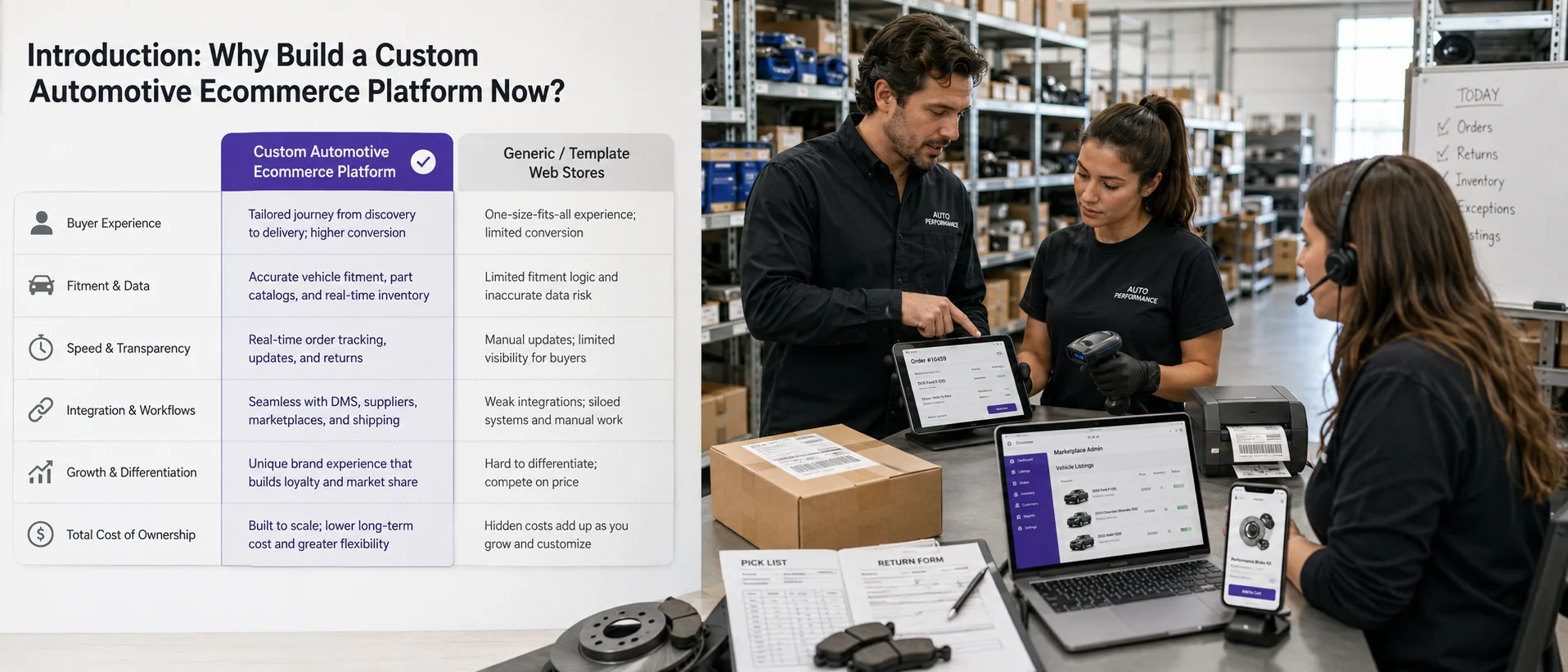
Founders and product owners in automotive retail are facing a pivotal shift: buyers now expect a digital experience that matches the speed and transparency of top ecommerce brands. The demand for a modern automotive ecommerce platform has never been higher. If your dealership or parts business is still relying on generic web stores or outdated templates, you risk losing customers to competitors who offer a seamless online journey from discovery to delivery.
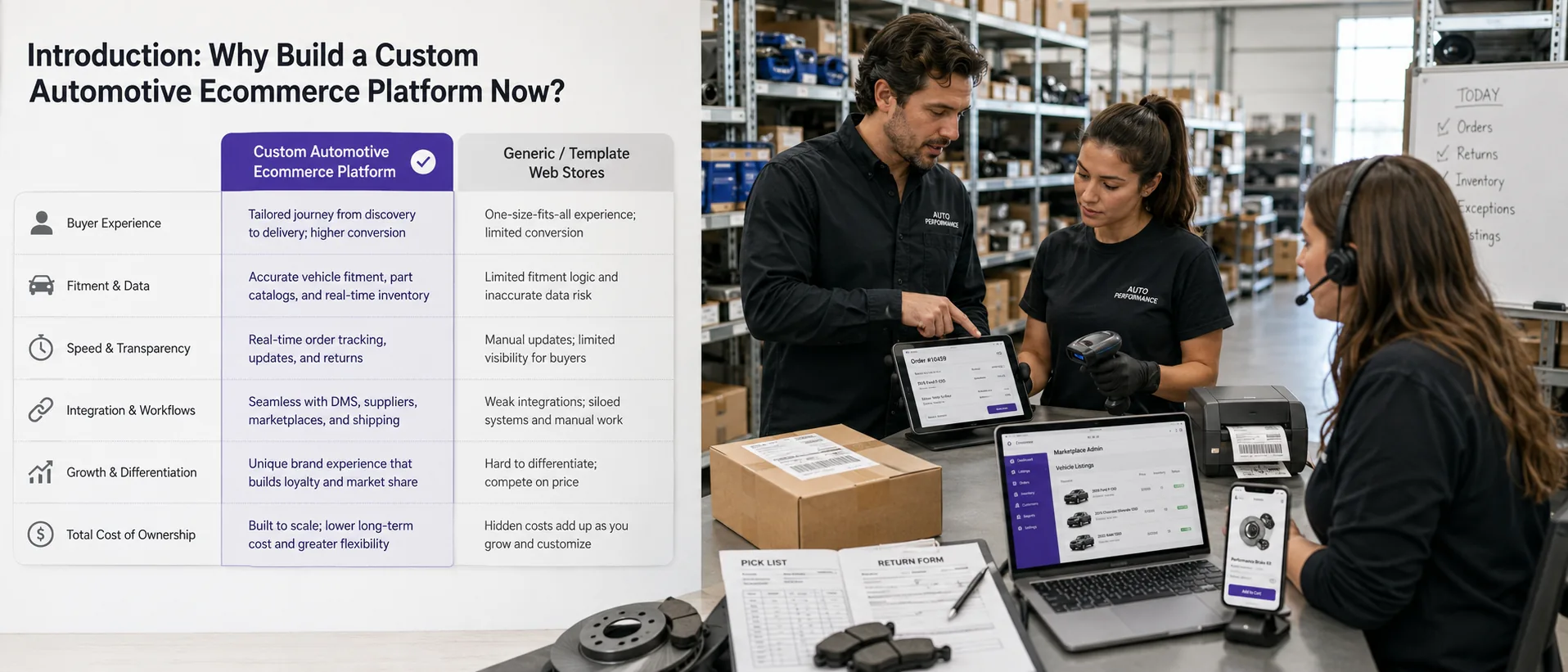
Building a custom automotive ecommerce platform gives you full control over your sales funnel, from real-time inventory and fitment checks to personalized financing and after-sales support. Unlike off-the-shelf solutions, a tailored platform can adapt to your unique workflows, integrate with your existing systems, and scale as your business grows. According to industry guides, custom development lets you automate quoting, streamline product discovery, and deliver the kind of user experience that drives higher conversion rates.
Generic ecommerce templates rarely meet the complex needs of automotive sales—think VIN decoding, trade-in calculators, or multi-location logistics. By investing in a platform built for your business, you can differentiate on features that matter to your customers and respond quickly to market shifts. This guide will walk you through the practical steps, best practices, and tradeoffs in building an automotive ecommerce platform that actually delivers results. For a deeper dive into platform options and our portfolio, see our Automotive eCommerce Development Services post or browse case studies of shipped projects.
Understanding the Automotive Ecommerce Market and Buyer Expectations
Building a successful automotive ecommerce platform today means more than just putting vehicles or parts online. Buyers in this vertical have high expectations shaped by their experiences with top-tier retail and digital brands. They want a platform that makes it easy to research, compare, and purchase — all with minimal friction and maximum transparency.
Modern automotive ecommerce buyers expect seamless product discovery, real-time inventory updates, and transparent pricing. As outlined in Appinventiv’s automotive ecommerce platform guide, automating steps like quotations and inventory checks is now standard. This reduces manual errors and speeds up the sales process, which is critical for both B2C and B2B buyers. Platforms that integrate these features are far more likely to convert browsers into buyers.
Another key expectation is a mobile-first experience. Many automotive shoppers start their journey on mobile devices, whether they’re searching for parts, comparing vehicles, or booking service appointments. According to Elementor’s ecommerce website guide, strategy and user experience should come before any technical decisions. For automotive ecommerce, this means responsive layouts, fast load times, and intuitive navigation — especially for users comparing specs or checking financing options on the go.
Trust is a major decision factor. Buyers look for detailed product information, verified reviews, warranty details, and secure checkout flows. As highlighted by Object Edge’s ecommerce best practices, platforms that build trust through transparency and support see higher engagement and conversion rates. Features like live chat, visible customer support, and clear return policies all help reduce buyer anxiety.
In summary, if you want to build an automotive ecommerce platform that stands out, focus on seamless search, mobile optimization, transparent pricing, and trust-building features. For a deeper dive into implementation and platform choices, see our Automotive eCommerce Development Services post or explore our custom ecommerce solutions.
Key Features and Functionalities for Automotive Ecommerce Platforms
To build a successful automotive ecommerce platform, you need more than a basic online storefront. Modern automotive buyers expect real-time information, customization, and a frictionless path to purchase. Sellers and dealers need tools to manage inventory, pricing, and customer engagement efficiently. Below are the core features every automotive ecommerce platform should prioritize for scalable growth and a standout user experience:
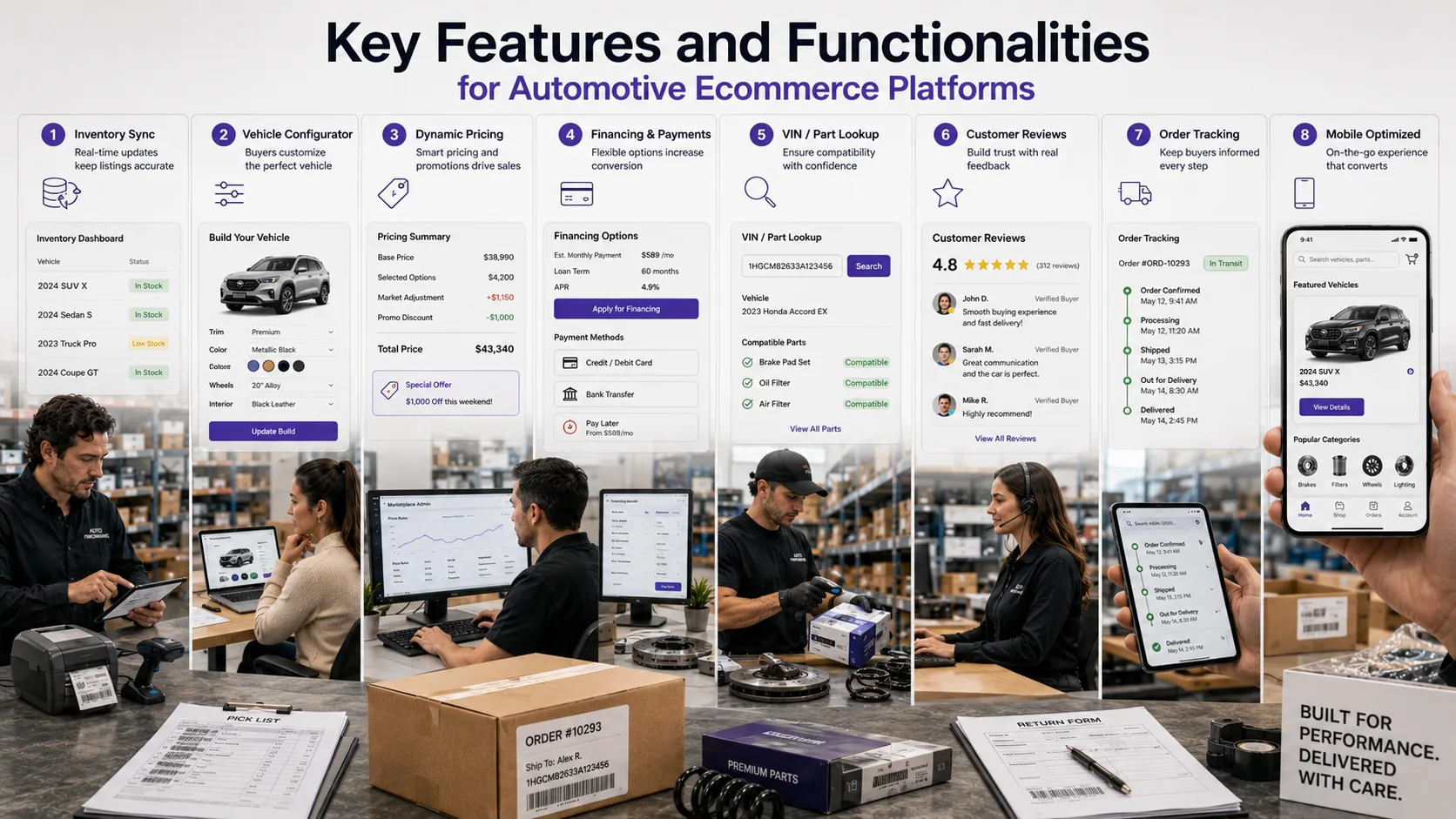
- Inventory Management: Real-time, accurate inventory is critical. Your platform should sync with dealer management systems or warehouse databases to display up-to-date vehicle and parts availability. This reduces manual errors and builds buyer trust. SellerZone (Prompt Gurru portfolio) is an illustrative example, using automated inventory sync to keep listings current across web and mobile.
- Vehicle Configurator: Let buyers customize vehicles by selecting color, trim, engine, and accessories. A visual configurator increases engagement and average order value—now a standard in automotive digital retail solutions. See Appinventiv's automotive ecommerce guide for more on this feature.
- Dynamic Pricing and Promotions: Integrate real-time pricing engines to adjust offers based on demand, inventory, or special events. Support for coupons, trade-in credits, and tiered discounts is key for both B2C and B2B automotive online sales platforms. Automated quotation tools can streamline sales and reduce negotiation cycles.
- Financing and Payment Options: Integrate with lenders for instant financing decisions, lease calculators, and flexible payment plans. Buyers expect to see estimated monthly payments and apply for credit online. Secure payment gateways and deposit support are essential for closing deals.
- VIN and Part Lookup: For parts and accessories, a VIN-based search or compatibility checker helps buyers find the right fit. This reduces returns and boosts satisfaction, especially for aftermarket and OEM sellers.
- Customer Reviews and Ratings: Social proof matters. Enable verified reviews for vehicles, sellers, and service experiences to build trust and help buyers make informed decisions. Object Edge's ecommerce best practices highlight the impact of reviews on conversion rates.
- Order Tracking and Notifications: Keep buyers updated with order status, shipping details, and delivery timelines. Automated notifications via email or SMS reduce support tickets and improve transparency.
- Mobile-Optimized Experience: With more buyers researching and purchasing on mobile, your platform must be fully responsive and fast. Features like one-click call, chat, and location-based inventory boost conversion rates. For more on mobile-first design, see our post on ecommerce software development best practices.
These features form the backbone of any high-performing automotive ecommerce platform. Prioritizing them will help you deliver a seamless experience for both buyers and sellers, setting your business up for scalable growth. For a full breakdown of how these modules fit into a custom build, check our service offerings or book a discovery call with our team.
For more industry insights and definitions, see DynamicWeb's ecommerce definitions guide.
Choosing the Right Technology Stack and Architecture
Selecting the right technology stack is one of the most critical decisions when building an automotive ecommerce platform. Founders and product owners need to balance scalability, speed to market, and long-term maintainability—without locking themselves into tools that limit future growth or integrations.
Frontend: For web storefronts, React is a go-to choice because it delivers fast, SEO-friendly, and highly interactive user experiences. If you plan to offer a branded mobile app alongside your site, Flutter is a proven option for cross-platform development, letting you ship both iOS and Android apps from a single codebase. This approach is especially valuable for automotive buyers who expect a seamless experience across devices.
Backend: FastAPI (Python) is a modern backend framework that supports rapid API development and handles real-time inventory, search, and order workflows efficiently. Node.js is another popular backend, especially if your team prefers JavaScript throughout the stack. Both integrate well with scalable databases like PostgreSQL or MongoDB, which are essential as your product catalog and user base grow.
Cloud Infrastructure: AWS is the default for scalable hosting, storage, and managed services. Using Docker containers and Kubernetes orchestration helps you handle traffic spikes and roll out new features safely. For smaller teams, managed platforms like AWS Elastic Beanstalk or Google Cloud Run can simplify deployment without sacrificing reliability. For more on cloud and deployment patterns, see our Web Application Development and Workflow Automation for AI and Business Teams in 2026 post.
Architecture Patterns: Most automotive ecommerce builds start with a modular monolith—organizing code by feature—then evolve toward microservices as scale and integration needs grow. Microservices offer flexibility for integrating inventory, CRM, and payment gateways, but can add complexity early on. This pattern is reflected in SellerZone (Prompt Gurru portfolio), where a mobile-first architecture supports rapid feature delivery and future integration with dealer systems.
When evaluating your stack, prioritize maintainability and ease of integration with third-party tools. For more best practices and stack selection tips, check out this automotive ecommerce platform development guide and this practical ecommerce website build framework. For more examples of shipped platforms, browse our portfolio case studies.
Integrations: Inventory, CRM, Payment Gateways, and Logistics
For any automotive ecommerce platform to succeed, seamless integration with core business systems is non-negotiable. Buyers expect real-time inventory, transparent pricing, and frictionless checkout—none of which are possible without robust integrations. Here are the four integration categories that matter most for automotive online sales platforms:
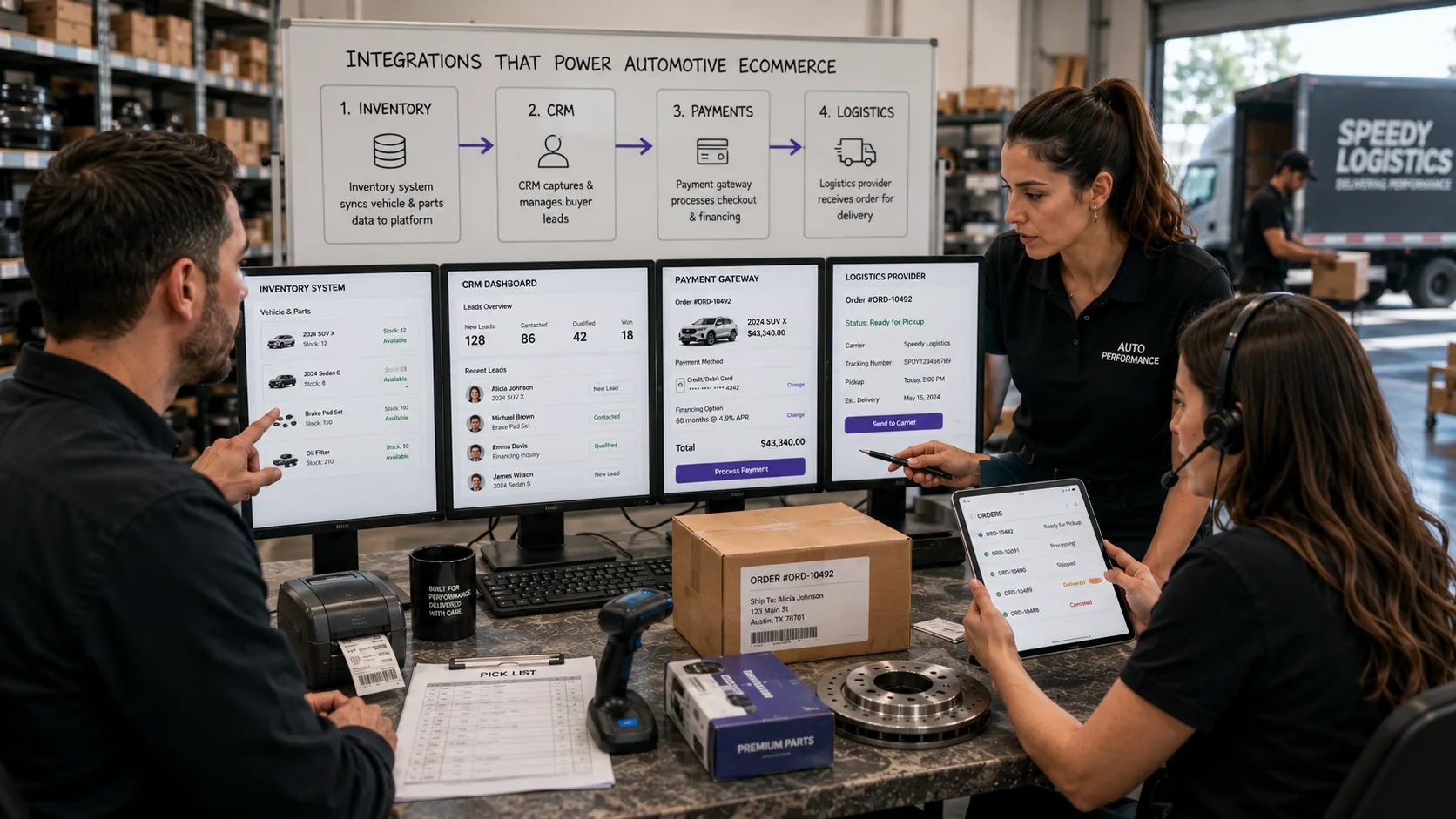
1. Inventory Management Systems
Integrating with dealer management systems (DMS) or inventory databases ensures your platform always displays accurate, up-to-date vehicle listings and parts availability. This reduces manual errors, prevents overselling, and gives buyers confidence that what they see is actually in stock. For multi-location or multi-vendor setups, syncing inventory across channels is critical. According to Appinventiv’s automotive ecommerce guide, automating inventory updates is a foundational best practice for scaling sales.
2. CRM and Lead Management
Connecting your ecommerce platform to a CRM lets you capture leads, track buyer behavior, and automate follow-ups. This is especially important for high-ticket automotive purchases, where nurturing and personalized outreach can make or break a sale. Many teams use custom integrations or third-party APIs to sync customer data, test-drive requests, and sales pipeline status. For more on CRM integration patterns, see our API development and integration article.
3. Payment Gateways and Financing Partners
Automotive ecommerce buyers expect secure, flexible payment options—credit cards, bank transfers, and increasingly, integrated financing. Your platform should support multiple payment gateways and, if relevant, connect with lending partners for instant loan offers. This not only streamlines checkout but also expands your buyer pool. Stripe and similar providers offer APIs that can be tailored for automotive needs. For practical payment integration tips, Stripe’s ecommerce resource is a solid reference.
4. Logistics and Shipping Providers
For parts, accessories, or even vehicle delivery, integrating with logistics partners automates shipping quotes, tracking, and fulfillment. This reduces manual coordination, speeds up delivery, and keeps buyers informed at every step. Many platforms use shipping APIs or direct integrations with major carriers. As highlighted in DynamicWeb’s ecommerce integration guide, these connections are essential for operational efficiency and customer satisfaction.
Building these integrations right from the start is a core part of automotive ecommerce best practices. If you’re planning a new platform or upgrading an existing one, make integration a top priority—and consider working with a team that’s shipped similar solutions. Learn more about our API integration services or see how we’ve handled inventory and CRM sync in SellerZone (portfolio example).
User Experience and Mobile Optimization for Automotive Buyers
User experience is a make-or-break factor for any automotive ecommerce platform. Buyers expect fast, intuitive, and mobile-optimized shopping—whether they’re searching for parts, accessories, or vehicles. If your platform feels clunky or slow, shoppers will leave for a competitor before you can say "test drive." Prioritizing UX directly impacts sales and long-term retention.
Start with mobile-first design principles. Responsive layouts, touch-friendly controls, and clear call-to-actions are essential. Most automotive buyers now begin their journey on a phone, so your site must load quickly, display crisp images, and keep navigation simple. Use sticky filters for make, model, year, and price to help buyers narrow options without endless scrolling. According to Appinventiv’s automotive ecommerce guide, simplifying product discovery and checkout is key to boosting conversion rates.
Speed matters. Compress images, lazy-load inventory, and minimize third-party scripts. Even a one-second delay can cost you a sale. For checkout, streamline every step: offer guest checkout, autofill for VIN or license plate, and mobile wallet payments. Reduce form fields and steps—buyers should never have to pinch-zoom or hunt for buttons. For more on ecommerce UX best practices, see this Object Edge article on seamless online retail experiences.
Don’t just rely on analytics—test your platform on real devices with actual users. Feedback from real shoppers will reveal friction points that data alone can miss. For a deeper dive into UI/UX design for ecommerce, check out our UI/UX design blog and see how Prompt Gurru approaches user-centric builds. If you’re planning a new automotive ecommerce platform, our custom development services can help you avoid common UX pitfalls and deliver a site that converts.
Security, Compliance, and Data Privacy Considerations
Security and compliance are non-negotiable for any automotive ecommerce platform. If your platform handles customer data, payment details, or sensitive vehicle information, you are directly responsible for protecting that data and meeting legal standards. A single breach or compliance failure can mean lost trust, regulatory fines, and real business impact.
Start with the basics: use SSL/TLS encryption to secure all data in transit—this is now a baseline expectation, not a bonus. For payment processing, your platform must be PCI DSS compliant to handle credit card transactions safely. Work with payment gateways that are certified and keep your own systems out of scope for direct card storage whenever possible. For platforms serving European customers, GDPR applies—this means clear consent, data minimization, and the right for users to access or delete their data. Even if you are not based in the EU, similar privacy expectations are spreading globally.
Authentication is another critical layer. Use secure password policies, multi-factor authentication (MFA) for admin and seller accounts, and session management to reduce the risk of unauthorized access. Regularly audit user roles and permissions—especially if you have dealer, admin, and customer tiers. For more on best practices, see this automotive ecommerce security guide and DynamicWeb's ecommerce definitions.
Neglecting security can expose you to data theft, fraud, and legal action. Make security and compliance a core part of your build process—not an afterthought. If you need help with secure architecture or compliance audits, read our practical data protection tips or contact Prompt Gurru for a discovery call.
Case Study: SellerZone Automotive Ecommerce Platform (Illustrative Example)
When automotive retailers ask what it takes to build a scalable, user-friendly ecommerce platform, we point to SellerZone as an illustrative example. SellerZone was designed and shipped by Prompt Gurru for sellers who need to manage inventory, process orders, and deliver a modern buying experience—without the overhead of legacy systems or generic templates.
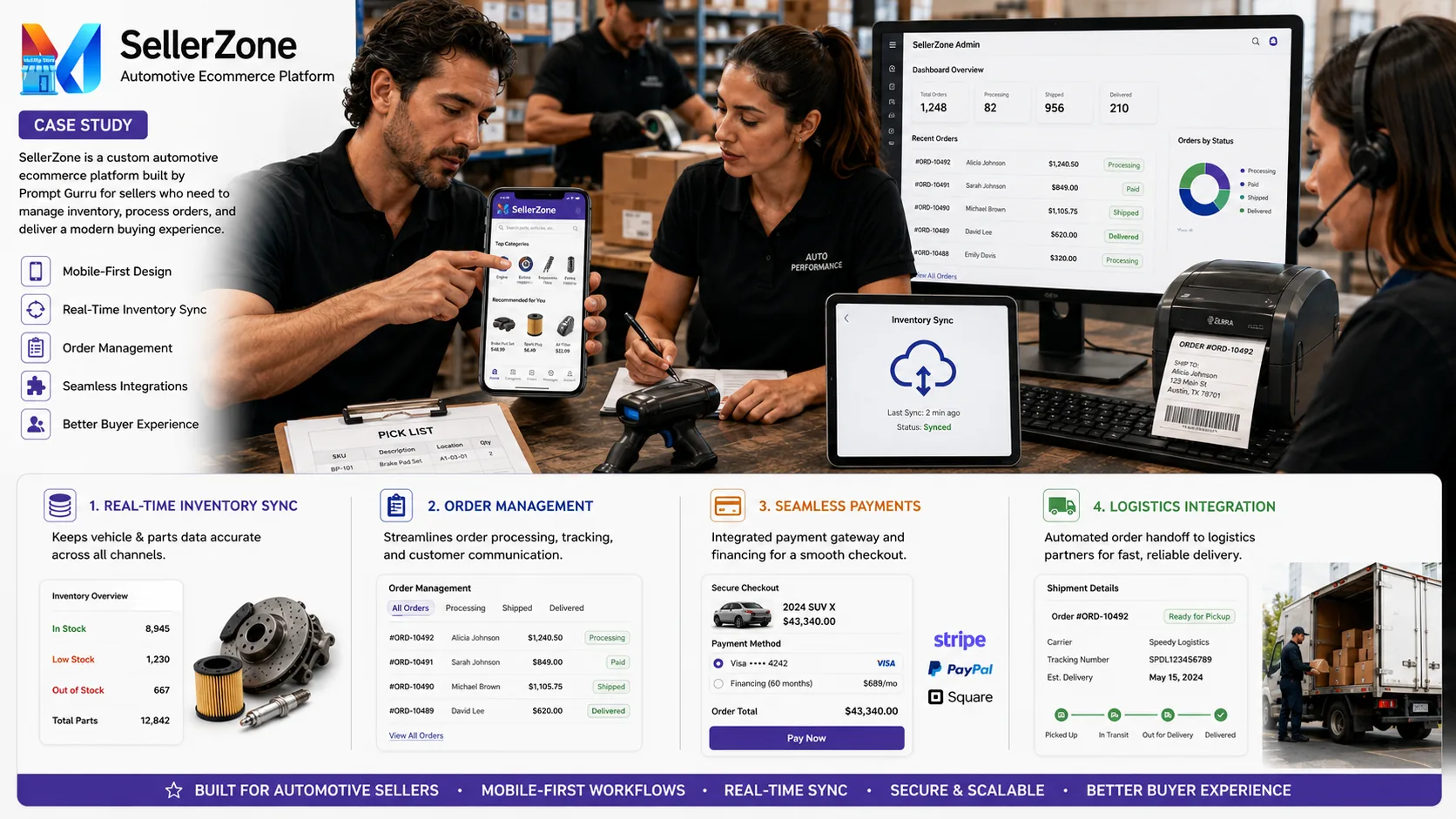
Feature highlights: SellerZone supports bulk product uploads, real-time inventory sync, order management, and integrated messaging between buyers and sellers. The platform is optimized for mobile-first workflows, which is critical in automotive retail where teams are often on the move. We built advanced search and filtering so users can quickly find specific vehicles, parts, or accessories—mirroring the best practices outlined in industry guides on automotive ecommerce platform development.
Tech stack and integrations: SellerZone uses Flutter for a unified mobile and web experience, with a backend powered by Node.js and Firebase for real-time updates. We integrated payment gateways, logistics APIs, and a custom inventory sync module, allowing sellers to manage listings across multiple channels. This approach aligns with the need for seamless integrations and automation, as discussed in ecommerce platform best practices.
Business impact: By centralizing product management and automating routine tasks, SellerZone helped sellers reduce manual errors and accelerate order processing. The mobile-first design improved adoption among field sales teams, while real-time notifications kept everyone in sync. For automotive retailers, this means faster time-to-market for new inventory and a smoother buyer journey—key drivers for online sales growth.
If you want to see more portfolio examples or discuss a custom automotive ecommerce build, check out our portfolio case studies or book a discovery call with our team.
DIY vs Hiring a Custom Software Studio: Pros, Cons, and Cost Considerations
Deciding whether to build your automotive ecommerce platform in-house or partner with a custom software studio is one of the most important calls you'll make as a founder or product owner. Each route has real tradeoffs in cost, speed, technical risk, and long-term flexibility. Here’s what you need to know before you commit resources.
Building In-House (DIY): If you have a technical team with ecommerce experience and bandwidth, DIY gives you full control over the stack, roadmap, and IP. However, automotive ecommerce platforms require deep integrations (inventory, payments, logistics), mobile optimization, and ongoing maintenance. Most teams underestimate the time and expertise needed for robust, scalable builds. According to industry guides, even basic ecommerce sites can take 4 to 8 months to launch, with complex automotive features adding significant scope.
Hiring a Custom Software Studio: A studio like Prompt Gurru brings proven workflows, automotive ecommerce best practices, and a portfolio of shipped platforms. You get a dedicated team that can accelerate delivery, handle integrations, and reduce technical risk. For example, our work on SellerZone (illustrative example) shows how a focused team can deliver a mobile-first, inventory-driven platform tailored to automotive sellers.
Cost and Time Ranges (Illustrative US Market):
- DIY: Expect to invest 20 to 40 hours/week of senior developer time for 6 to 12 months, plus project management, QA, and design. All-in, this can run $150,000 to $350,000+ in loaded salary and opportunity cost for a mid-sized platform.
- Custom Studio: US boutique agencies typically quote $100 to $200/hr for discovery, design, and build phases. A full automotive ecommerce platform with integrations, mobile UX, and admin tools often lands in the $120,000 to $250,000 range for a defined MVP, including discovery, build, test, and team training. Ongoing maintenance is usually a separate retainer.
DIY gives you maximum control but exposes you to delivery risk and slower time to market. Hiring a studio reduces risk, speeds up launch, and brings outside expertise—especially valuable if you’re new to automotive digital retail. For more on total cost of ownership and best practices, see this automotive ecommerce platform guide and DynamicWeb’s ecommerce definitions.
Not sure which path fits your business? Book a free discovery call or contact Prompt Gurru to get a tailored roadmap and honest advice before you invest.
Common Pitfalls and How to Avoid Them
Even experienced teams can run into trouble when building an automotive ecommerce platform. Here are five of the most common mistakes we see—and practical ways to steer clear of them:
- Ignoring mobile user experience: Many platforms still treat mobile as an afterthought, but automotive buyers increasingly browse and transact on their phones. Prioritize responsive design, fast load times, and mobile-first workflows from the start. For more on why this matters, see this ecommerce website guide.
- Poor integration planning: Inventory, CRM, payments, and logistics systems must work together smoothly. Rushing integration or skipping proper API documentation leads to costly rework. Map out all required integrations early and allocate time for thorough testing. This automotive ecommerce blueprint highlights the value of automation and integration at every stage.
- Underestimating security and compliance: Automotive ecommerce platforms handle sensitive customer data and payments. Failing to implement secure authentication, encryption, and compliance checks can expose your business to risk. Regularly review security best practices and consult with a specialist if needed.
- Scope creep and unclear requirements: Without a clear roadmap, features can balloon and timelines slip. Set a minimum viable product (MVP) scope, document requirements, and use phased releases to stay on track. If you’re unsure whether to build in-house or hire, our article When to Hire a Custom Software Developer vs Buying SaaS Tools breaks down the tradeoffs.
- Neglecting analytics and feedback loops: Launching without robust analytics means you’ll miss out on insights that drive growth. Set up event tracking, conversion funnels, and feedback channels from day one to inform future improvements. For more ecommerce best practices, check Object Edge's eCommerce blog.
Addressing these pitfalls early will help your automotive ecommerce platform launch smoothly and scale with confidence.
Next Steps: Planning Your Automotive Ecommerce Platform Build
Ready to turn your research into results? Building a successful automotive ecommerce platform is a big move, but with the right plan, you can set your business up for long-term growth. Here are five practical next steps to get your project on track:
- Define your requirements and goals. Gather input from key stakeholders, clarify your target market, and list the must-have features that will set your platform apart. For a detailed look at requirements planning, see this automotive ecommerce guide.
- Select your technology stack. Decide if you'll use a proven ecommerce framework like Shopify or Adobe Commerce, or invest in custom development for more control and scalability. Platform comparisons like these insights can help you weigh your options.
- Build your team or choose a specialist partner. Assess whether you have the in-house expertise for design, development, and QA, or if partnering with a studio experienced in automotive ecommerce is the smarter route. A partner like Prompt Gurru can help you avoid common missteps and accelerate your launch—read our build guide for more on this decision.
- Define your MVP and launch plan. Prioritize features for your minimum viable product, plan a pilot launch, and be ready to iterate based on real user feedback. For a proven launch process, check out this 6-step eCommerce launch guide.
- Book a discovery call to validate your roadmap. Before you invest heavily, talk with an expert who can review your plan and flag any gaps. Contact Prompt Gurru or book a free discovery call to get tailored advice for your automotive ecommerce platform build.
With a clear plan and the right support, your automotive ecommerce platform can drive sales and streamline operations. Take the next step and set your project up for success.
Frequently Asked Questions
What is the cost to build an automotive ecommerce platform?
Custom automotive ecommerce platform development typically ranges from $80,000 to $250,000+ for a full-featured solution, depending on complexity, integrations, and mobile requirements. This includes discovery, design, build, testing, and launch. Ongoing costs for hosting, maintenance, and feature updates should also be budgeted. For a tailored quote, contact Prompt Gurru.
How long does it take to develop such a platform?
Most custom builds take 4 to 8 months from kickoff to launch, depending on feature scope, integrations (like inventory or CRM), and stakeholder feedback cycles. A phased approach—starting with a minimum viable product—can help you launch faster and iterate based on real user feedback.
Should I build custom or buy an existing solution?
If your business model fits standard workflows, buying an off-the-shelf ecommerce platform (like Shopify or Magento) can be faster and cheaper. For unique inventory, quoting, or dealer workflows, a custom build offers more control and scalability. See our Automotive eCommerce Development Services post for a deeper comparison.
What key features are essential for automotive ecommerce?
Core features include advanced search and filtering, VIN or part lookup, real-time inventory sync, secure checkout, payment gateway integration, mobile optimization, and order tracking. Dealer portals, CRM integration, and logistics modules are also common in successful automotive ecommerce platforms. For best practices, check this industry guide.
How do I ensure security and compliance?
Use SSL encryption, follow PCI DSS for payments, and implement secure authentication for all user roles. Regular security audits and compliance with local data privacy laws (like GDPR or CCPA) are essential. For more on ecommerce security, see DynamicWeb's definitions guide.
Still have questions about building your automotive ecommerce platform? Book a discovery call with our team or browse more articles for practical advice.
About the Author
The Prompt Gurru team brings over 5 years of hands-on experience designing and building custom ecommerce and marketplace platforms for automotive retailers, DTC brands, and B2B sellers. Our portfolio includes SellerZone (illustrative example), a mobile-first platform that streamlines inventory, order management, and digital retail for automotive and multi-category sellers. We have shipped more than 50 projects across web and mobile, serving clients in 25+ countries.
Our expertise covers the full stack: from scalable backend APIs and real-time inventory sync to intuitive mobile UIs and secure payment integrations. We understand the unique operational needs of automotive ecommerce, including parts catalogs, VIN-based search, and dealer workflows. See more of our work in the Prompt Gurru portfolio.
If you're planning to build or modernize your automotive ecommerce platform, our team can help you scope, design, and launch with confidence. Contact us or book a free discovery call to discuss your project.
Ready to automate your business?
We build n8n workflows, AI pipelines, Flutter apps, and custom software for startups and SMEs - like the system that powers this blog.
Book a free discovery call