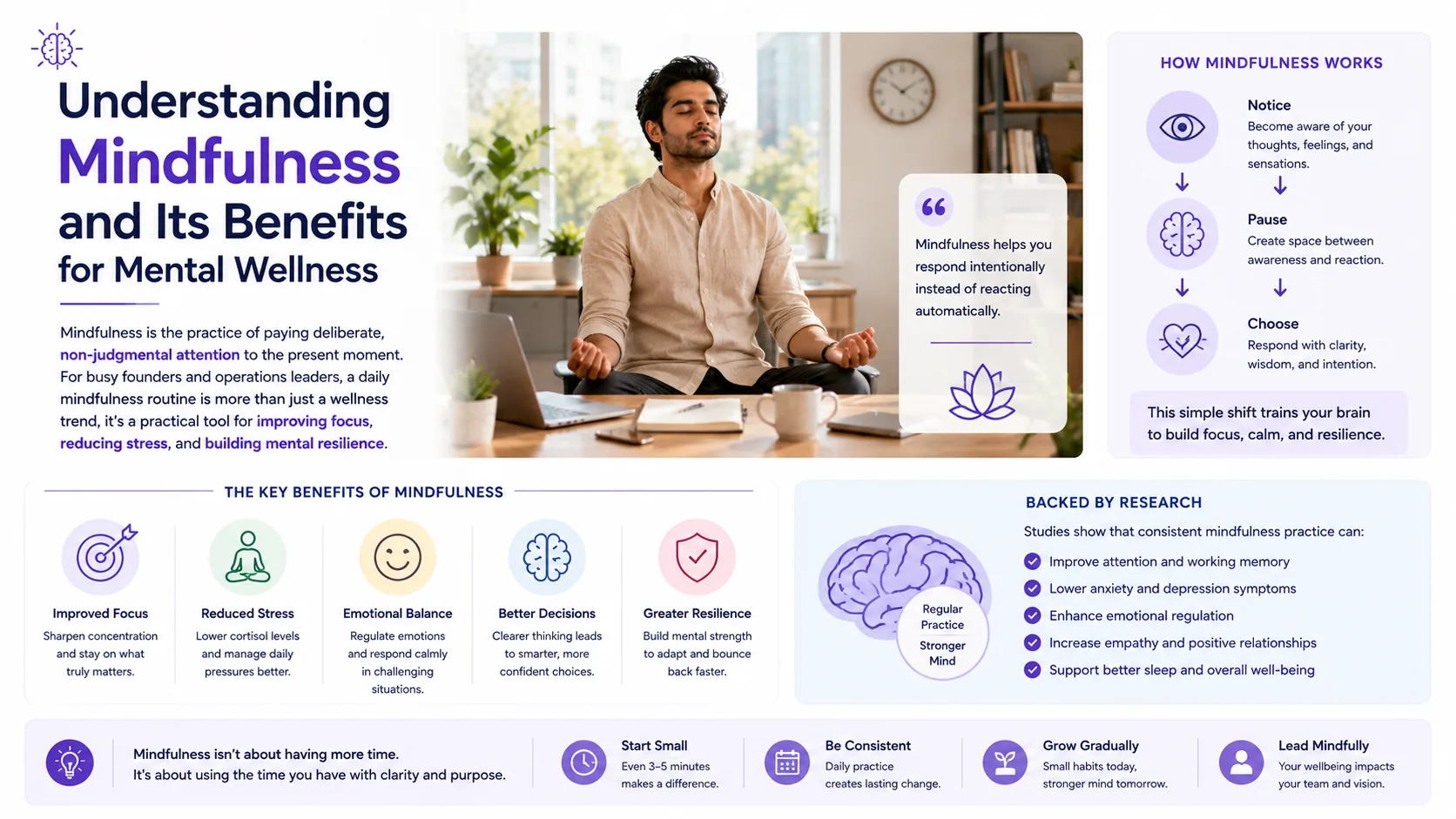
Explore how mindfulness practices enhance mental wellness by improving emotional health and resilience. This article provides actionable insights and evidence-based benefits tailored for mental wellness program managers and healthcare platform founders.
Why Mindfulness Matters for Mental Wellness
If you manage a mental wellness program, run an EAP, or build healthcare platforms, you already know that mindfulness benefits mental wellness in ways that go far beyond buzzwords. For decision-makers, the pressure is on to deliver practical, evidence-based mental wellness techniques that support emotional health, resilience, and day-to-day functioning at scale.
Mindfulness is not just meditation—it's a set of habits and practices that help people notice their thoughts, manage stress, and respond with greater clarity. According to the NIH Emotional Wellness Toolkit, regular mindfulness activities can support emotional regulation and help people build healthier routines. For program managers and healthcare founders, integrating mindfulness into your platform or care model is now a core expectation from users and clinical partners alike.
Recent guides from Deconstructing Stigma and HelpGuide.org highlight how mindfulness practices can improve both mental and physical health, boost emotional intelligence, and create a foundation for long-term wellbeing. For leaders designing digital wellness products or scaling clinical services, understanding these benefits is key to making informed choices about features, content, and support models.
This article breaks down what mindfulness really means, the science behind its impact, and how you can bring these benefits to your users—drawing on practical examples from platforms like Mindway. If you're ready to move from theory to implementation, or want to see how others have built mindfulness into their wellness stack, you're in the right place. For more actionable routines, see our Daily Mindfulness Routine That Actually Works or explore our portfolio case studies for inspiration.
What Is Mindfulness? Core Concepts and Practices
Mindfulness is the practice of intentionally focusing your attention on the present moment, without judgment. For mental wellness leaders, understanding mindfulness means recognizing it as both a skill and a set of practical techniques that help people become more aware of their thoughts, feelings, and surroundings. This awareness forms the foundation for many mental wellness programs and is increasingly supported by research and digital health platforms.
At its core, mindfulness is about noticing what is happening right now—internally and externally—without trying to change or escape it. This present-moment awareness helps individuals respond to stress, anxiety, and emotional challenges with greater clarity and calm. According to the Deconstructing Stigma mental health guide, giving your full attention to the current moment has been shown to benefit both physical and mental health.
Common mindfulness practices include:
- Mindful breathing: Focusing on your breath as it moves in and out, which anchors attention and calms the mind.
- Body scan meditation: Slowly bringing awareness to different parts of the body, noticing sensations without judgment.
- Guided meditation: Using audio or app-based instructions to support relaxation and focus. Apps like Headspace offer accessible guided mindfulness sessions for individuals and teams.
- Everyday mindfulness: Bringing attention to routine activities—such as eating, walking, or listening—can help reinforce mindful habits throughout the day.
These techniques are not just for individuals; they can be integrated into group sessions, employee assistance programs, and digital wellness platforms. The NIH Emotional Wellness Toolkit recommends scheduling regular times for relaxing activities that use mindfulness or breathing exercises to support emotional health.
For decision-makers designing mental wellness solutions, mindfulness practices offer a flexible toolkit. They can be adapted for different populations, delivered in-person or digitally, and measured for impact. To see how these practices fit into a daily routine, check out our Daily Mindfulness Routine That Actually Works article. For more on integrating mindfulness into your wellness programs, explore our AI automation services and contact us for tailored platform development.
Scientific Evidence Supporting Mindfulness Benefits
For mental wellness program managers, EAP providers, and healthcare founders, the question is not whether mindfulness is popular, but whether it delivers measurable benefits for mental health. The answer, supported by a wide range of research and clinical guides, is yes—mindfulness practices are linked to real improvements in mental wellness, stress reduction, and emotional regulation.
Mindfulness, which means paying attention to the present moment without judgment, is now a core part of many mental wellness techniques. According to the National Institutes of Health Emotional Wellness Toolkit, regular mindfulness activities such as mindful breathing or body scans can help people manage daily stress and boost emotional health. The NIH recommends these practices as practical tools for both individuals and organizations aiming to support mental wellness.
Clinical resources like the HelpGuide.org Emotional Intelligence Expert Guide highlight that mindfulness is closely tied to emotional intelligence. By helping people notice their thoughts and feelings without being overwhelmed, mindfulness supports self-awareness and social awareness—two pillars of emotional intelligence that are essential for resilience and workplace wellbeing.
Further, research summarized by the Deconstructing Stigma project shows that mindfulness benefits extend to both physical and mental health, reducing symptoms of anxiety and promoting resilience. These findings are echoed by wellness organizations and clinics that integrate mindfulness into group sessions, digital modules, and self-guided programs.
For practical inspiration, the Mind and Body Wellness resources from the International Myeloma Foundation offer step-by-step guides for introducing mindfulness into daily routines, supporting both patients and staff in managing stress and enhancing mental wellness.
In summary, the scientific consensus is clear: mindfulness benefits mental wellness by reducing stress, improving emotional regulation, and building resilience. For decision-makers designing wellness programs or digital health tools, these outcomes make mindfulness a strong candidate for inclusion in any modern mental health initiative.
- Explore the NIH Emotional Wellness Toolkit for practical mindfulness activities.
- Review wellness resources from Myeloma.org for program inspiration.
- For real-world routines, see our Daily Mindfulness Routine That Actually Works.
How Mindfulness Enhances Emotional Intelligence and Resilience
For mental wellness leaders, understanding how mindfulness benefits emotional intelligence is key to designing effective programs and digital tools. Emotional intelligence (EQ) refers to the ability to recognize, understand, and manage our own emotions, as well as to perceive and influence the emotions of others. Mindfulness practices—such as focused breathing, body scans, and present-moment awareness—directly support these skills by training attention and self-observation without judgment.
According to HelpGuide.org's expert guide on emotional intelligence, mindfulness is foundational for building self-awareness, a core EQ component. When individuals regularly practice mindfulness, they become more attuned to their thoughts, feelings, and physical sensations. This heightened self-awareness makes it easier to notice emotional triggers and respond thoughtfully rather than react impulsively—an essential skill for stress management and resilience.
Mindfulness also strengthens empathy and social awareness. By learning to observe one’s own emotions with curiosity, people become more capable of recognizing emotional cues in others and responding with compassion. This is especially valuable in group settings, where shared mindfulness exercises can foster trust and open communication. As noted in research on spirituality and mental health, mindful attention to the present moment helps individuals connect more deeply with themselves and those around them, supporting both personal and collective wellbeing.
Finally, resilience—the ability to adapt and recover from setbacks—relies on the same mindfulness-driven skills. By practicing non-judgmental awareness, individuals can process difficult emotions more effectively and maintain perspective during challenging times. For organizations building or evaluating mental wellness platforms, integrating mindfulness-based EQ training is a proven way to boost both individual and team resilience. For more practical strategies, see the NIH Emotional Wellness Toolkit.
Mindfulness Techniques for Everyday Mental Wellness
Integrating mindfulness into daily routines does not require expensive tools or hours of free time. For mental wellness program managers and healthcare leaders, offering practical, accessible mindfulness practices can help clients and teams build resilience and emotional balance. Here are four proven mindfulness techniques that support mental wellness and emotional health:
- Breathing Exercises: Simple breathing techniques, such as box breathing or deep belly breathing, can quickly reduce stress and bring attention to the present moment. Encourage clients to pause for a few minutes, inhale deeply for a count of four, hold for four, exhale for four, and pause again. This cycle calms the nervous system and is easy to teach in group or individual settings. The NIH Emotional Wellness Toolkit recommends scheduling regular times for mindful breathing as part of a daily wellness routine.
- Body Scan Meditation: This practice involves mentally scanning the body from head to toe, noticing sensations without judgment. It helps individuals reconnect with their physical presence and can reveal areas of tension or discomfort. Program leaders can guide body scans in sessions or recommend recorded versions from trusted apps like Headspace.
- Mindful Observation: Encourage clients to choose an everyday object—a cup, a leaf, or even their own breath—and observe it closely for one to two minutes. The goal is to notice details, textures, and sensations without labeling or analyzing. This technique builds focus and is especially useful for those new to mindfulness practices.
- Gratitude Journaling: Taking a few moments each day to write down three things one is grateful for can shift attention from stressors to positive experiences. This simple act, supported by research on mental wellness techniques, helps reframe mindset and can be integrated into both individual and group programs. For more on daily routines that work, see our Daily Mindfulness Routine That Actually Works.
These mindfulness practices are easy to adapt for different populations and can be delivered in-person, virtually, or through digital wellness platforms. According to recent guides on spirituality and mental health, even brief moments of mindful attention can benefit both physical and mental wellness. For program managers, the key is consistency and making these techniques accessible to all participants.
If you are looking to integrate mindfulness features into your wellness platform or want guidance on program design, contact Prompt Gurru for a discovery call.
Case Study: Mindfulness Integration in the Mindway EAP Platform (illustrative example)
For mental wellness program managers and EAP providers, the challenge is not just offering mindfulness resources, but making them accessible and actionable for users at scale. The Mindway platform, built as a full-stack EAP solution, integrates mindfulness directly into its core user experience—removing barriers to engagement and supporting measurable improvements in mental wellness.
Mindway's approach centers on embedding guided mindfulness practices throughout the user journey. Users can access short, evidence-based mindfulness sessions—such as breathing exercises, body scans, and gratitude prompts—directly from the home dashboard. These micro-practices are designed for busy professionals, with most sessions under five minutes, making it easy to build consistent habits even during a hectic workday.
To drive engagement, Mindway uses gentle reminders and progress tracking. Users receive personalized nudges to try new mindfulness techniques based on their recent activity and wellness goals. The platform also offers streaks and milestone badges, encouraging regular practice without feeling intrusive or gamified for its own sake.
For program managers, Mindway provides anonymized analytics on feature usage and engagement patterns. This allows organizations to see which mindfulness practices resonate most and to tailor wellness campaigns accordingly. The platform's integration of mindfulness is not just a bolt-on feature—it is woven into the broader EAP support model, including confidential chat, self-assessment tools, and access to professional counselors.
According to qualitative feedback from Mindway deployments, users report increased confidence in managing stress and a greater sense of emotional balance after regular use of the mindfulness modules. This aligns with research from resources like HelpGuide.org and the NIH Emotional Wellness Toolkit, which highlight the value of integrating mindfulness into daily routines for emotional intelligence and resilience.
For a deeper look at Mindway's feature set and implementation patterns, see our portfolio case studies.
DIY Mindfulness vs. Professional Support: When to Build or Buy Solutions
If you're managing a mental wellness program or evaluating options for your clinic, the question of whether to build your own mindfulness initiative or partner with a professional platform is more than a budget line item. It shapes user engagement, clinical outcomes, and the sustainability of your wellness offering.
DIY mindfulness programs—such as in-house workshops or self-guided resources—offer flexibility and can be tailored to your community's culture. They often appeal to organizations with existing mental health expertise or those piloting mindfulness as a low-cost add-on. However, DIY efforts typically require significant investment in staff training, ongoing content development, and user engagement strategies. Without dedicated expertise, programs may struggle with consistency and measurable results. According to the NIH Emotional Wellness Toolkit, regular mindfulness activities are most effective when they're integrated into daily routines and supported by evidence-based guidance.
Professional EAP platforms like Mindway (see portfolio) or leading mindfulness apps provide structured programs, expert-led content, and analytics that help track user progress. These solutions are designed for scalability and often include features like guided meditations, personalized recommendations, and confidential support. For example, Headspace offers a library of mindfulness tools and therapy options, making it easier for organizations to deliver consistent, high-quality experiences at scale. Outsourcing to a professional provider also reduces the burden on internal teams and ensures compliance with best practices in mental wellness (see more).
In short, DIY is best for organizations with strong in-house expertise and a small, highly engaged audience. Professional support is the right choice for those seeking rapid deployment, evidence-based content, and measurable outcomes. If you're weighing these options, our team at Prompt Gurru can help you scope, build, or integrate the right mindfulness solution for your platform. See our services or book a discovery call to discuss your goals.
Implementing Mindfulness Programs: Tools and Best Practices
Launching a mindfulness program in a healthcare or wellness setting requires more than good intentions. To see real mental wellness benefits, program managers need a structured approach, the right digital tools, and a plan for ongoing engagement. Here are three best practices that consistently drive success:
- Invest in evidence-based training: Start by equipping your staff or facilitators with foundational mindfulness knowledge. Use trusted resources like the NIH Emotional Wellness Toolkit or guided meditation platforms such as Headspace. Consistent, evidence-backed training ensures everyone models best practices and speaks the same language with clients.
- Choose technology that fits your workflow: For clinics, EAPs, or wellness providers, a digital platform like Mindway (see our portfolio) can centralize mindfulness content, track participation, and offer confidential support. Look for features like guided sessions, reminders, and progress tracking to keep users engaged and accountable.
- Embed mindfulness into daily routines: Make mindfulness accessible by integrating short exercises into meetings, shift changes, or care plans. According to HelpGuide.org, building emotional intelligence and social awareness often starts with simple, consistent mindfulness habits. Scheduling brief check-ins or breathing sessions can help both staff and clients build resilience over time.
Monitor engagement and collect feedback regularly to refine your program. For more practical routines, see our post on Daily Mindfulness Routine That Actually Works. If you need help designing or integrating a mindfulness platform, explore our AI automation and wellness tech services or contact us for a discovery call.
Frequently Asked Questions About Mindfulness and Mental Wellness
What are the main mindfulness benefits for mental wellness?
Mindfulness benefits mental wellness by reducing stress, improving focus, and supporting emotional balance. Regular mindfulness practices can help people manage anxiety and build resilience. According to the NIH Emotional Wellness Toolkit, mindfulness activities like breathing exercises can be a practical part of daily mental wellness routines.
How can mindfulness improve emotional intelligence?
Mindfulness helps individuals become more aware of their emotions and reactions, which is key for emotional intelligence. By practicing present-moment awareness, people can better understand their feelings and respond thoughtfully rather than react impulsively. For more on this connection, see the HelpGuide.org expert guide on emotional intelligence.
What are simple mindfulness practices to start today?
Simple practices include mindful breathing, body scans, and short guided meditations. Even a few minutes of focused attention on the breath or a mindful walk can make a difference. Apps like Headspace offer accessible guided sessions for beginners. For practical steps, see our article Daily Mindfulness Routine That Actually Works: Practical Steps for Consistent Mental Wellness.
When should I consider professional mindfulness support?
If stress, anxiety, or emotional challenges persist despite self-guided mindfulness, or if you are designing a program for a team or clinic, professional support can help. Trained counselors or platforms like Mindway (see our portfolio case studies) can provide structured guidance, group sessions, and tailored resources for mental wellness leaders.
How much does it cost to implement a mindfulness program?
Costs vary widely. Self-guided app subscriptions can start as low as $10 to $20 per month, while custom-built wellness platforms or group programs may require a larger investment. For organizations, budgeting should include training, content, and ongoing support. If you need a tailored solution, contact Prompt Gurru for a discovery call and a detailed quote.
About the Author
Prompt Gurru Team is a specialist studio in AI automation, custom web and mobile app development, and digital wellness solutions. With over 10 years of experience, we have delivered platforms for healthcare and mental wellness, including Mindway (EAP), Max HR, and Wahy Institute. Our team partners with founders, EAP providers, and clinics to design, build, and scale secure, user-friendly wellness products that drive real engagement and outcomes.
We serve clients in 25+ countries and have shipped 50+ projects live on Google Play, the App Store, and the web. If you are planning a new mental wellness platform or want to integrate mindfulness features into your product, contact us or book a discovery call to discuss your goals.
Ready to automate your business?
We build n8n workflows, AI pipelines, Flutter apps, and custom software for startups and SMEs - like the system that powers this blog.
Book a free discovery call