Learn how to develop secure, scalable healthcare and fitness software that meets compliance standards and drives patient engagement. This guide covers key steps including HIPAA compliance, essential app features, technology stack choices, and real-world case studies to help founders and product owners make informed build or hire decisions.
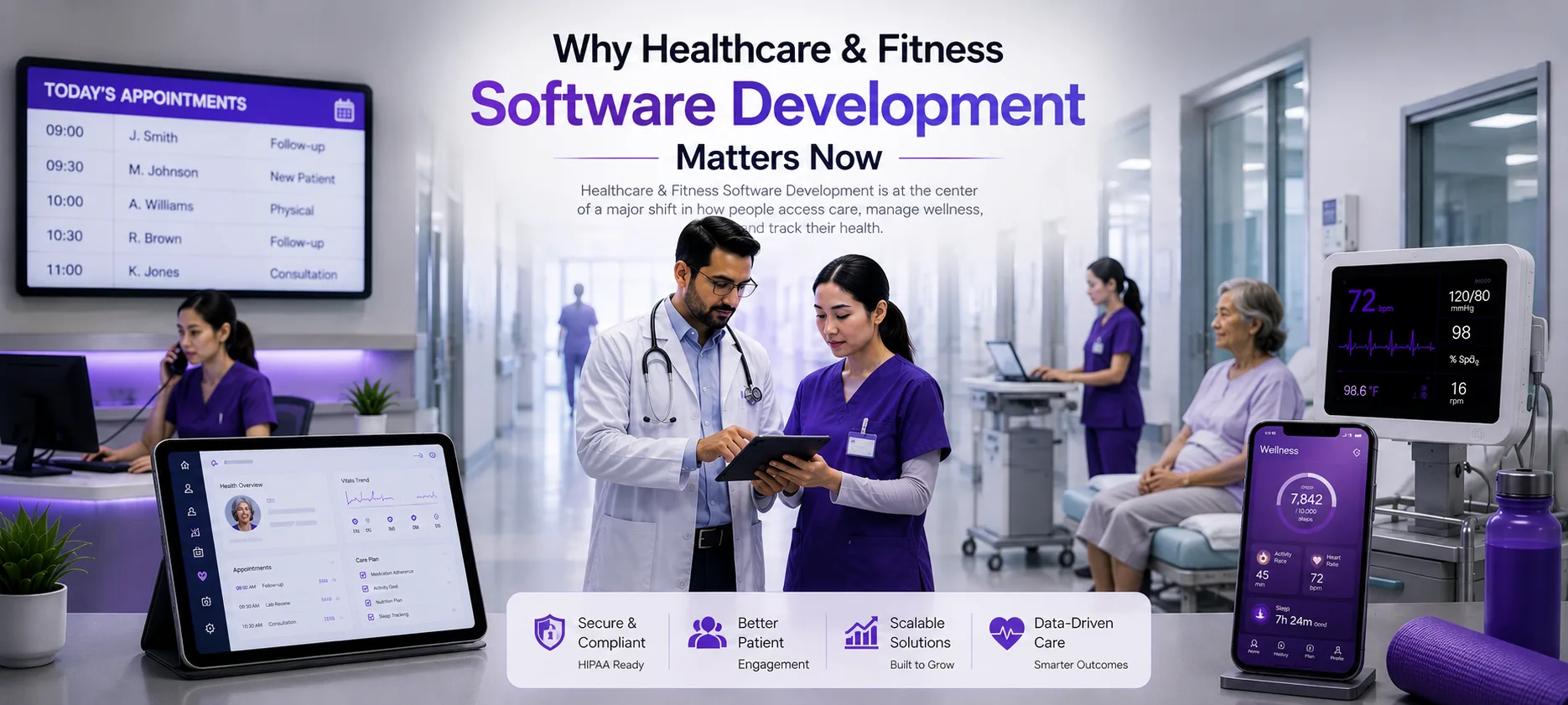
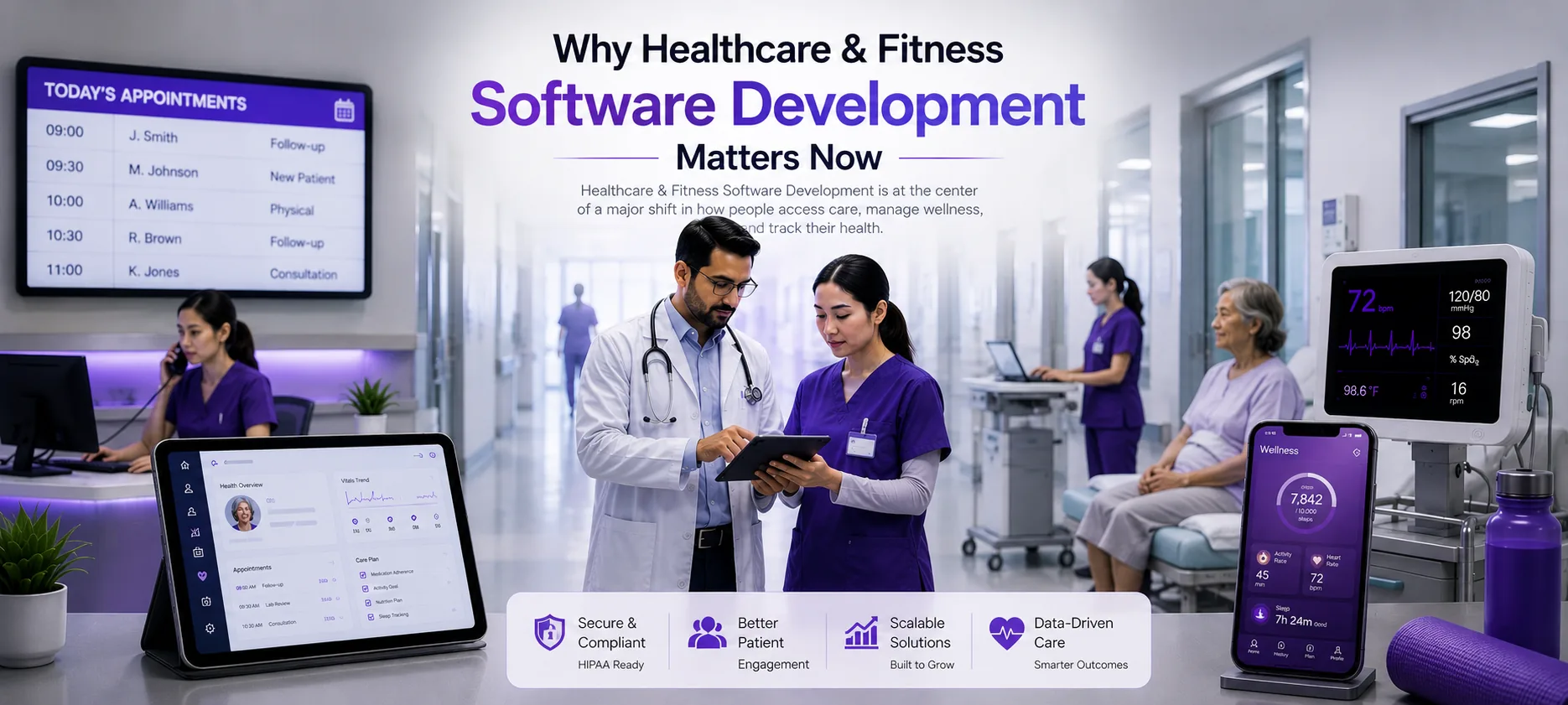
Why Healthcare & Fitness Software Development Matters Now
Healthcare & Fitness Software Development is at the center of a major shift in how people access care, manage wellness, and track their health. For founders and product owners, the stakes are high: users expect secure, on-demand healthcare and fitness apps that put privacy and trust first, while also delivering flexible, scalable solutions that can grow with demand. The surge in telehealth, personalized wellness plans, and remote patient monitoring means that building the right software is no longer optional—it's a strategic necessity.
Security and compliance are non-negotiable in this space. Whether you're developing a telehealth platform, a fitness tracker, or a mental wellness app, you must meet strict standards like HIPAA and protect sensitive data at every layer. At the same time, your platform needs to be robust enough to integrate with third-party systems, support rapid feature updates, and handle spikes in user activity without breaking.
Choosing the right approach—building in-house, buying off-the-shelf, or partnering with a specialist studio—can make or break your product's success. This guide will walk you through the critical decisions, compliance requirements, and proven strategies for healthcare and fitness app development. We'll draw on practical examples, including how platforms like Mindway deliver secure, scalable care. If you're ready to move from idea to launch with confidence, you're in the right place.
For more on healthcare app fundamentals, see our Healthcare App Development Guide. Explore our portfolio for shipped wellness and care platforms, or contact us to discuss your project.
Understanding Healthcare & Fitness Software Types and Use Cases
Healthcare & Fitness Software Development covers a broad set of digital solutions, each designed to address specific needs in patient care, wellness, and personal fitness. Knowing the main categories helps founders and product owners pick the right approach for their audience, compliance, and business model.
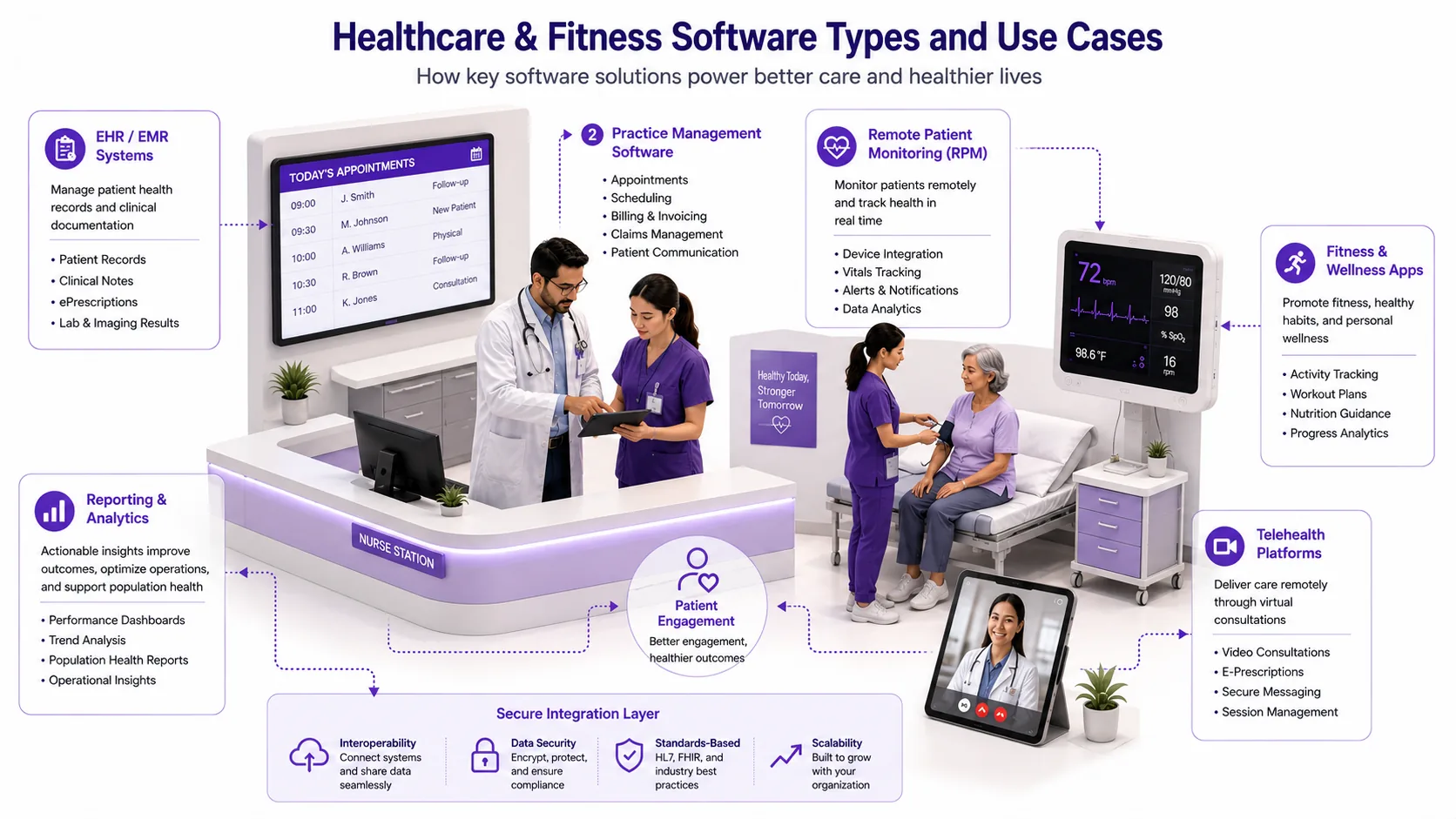
- Telehealth Platforms: These enable secure video consultations, remote patient monitoring, and digital intake forms. Telehealth software is now essential for clinics and mental health providers aiming to expand access and reduce in-person visits. For a practical overview, see this industry guide.
- Fitness App Development: Fitness apps let users track workouts, set goals, monitor nutrition, and connect with trainers or communities. Many integrate with wearables for real-time feedback. Use cases include personal training, group challenges, and habit tracking. For a detailed breakdown, check this fitness app guide and our own fitness app development article.
- Wellness and Mental Health Apps: These platforms focus on stress management, mindfulness, and emotional support. Features might include guided meditations, journaling, or access to Employee Assistance Programs (EAPs). Mindway, for example, is a Prompt Gurru-built EAP platform offering confidential support and self-care tools for employees.
- Medical Practice Management Systems: These streamline scheduling, billing, electronic health records (EHR), and patient communications for clinics. They are critical for operational efficiency and regulatory compliance. For more, see this practice management guide and our post on medical practice management software development.
Each software type targets unique user needs, from improving patient outcomes to boosting motivation and operational efficiency. The right mix depends on your product vision and compliance requirements. For more examples and best practices, see this healthcare software guide.
Key Compliance and Security Requirements (HIPAA, Data Privacy)
Building healthcare and fitness software is not just about features or user experience—compliance and security are mission-critical from day one. If your platform handles protected health information (PHI) or sensitive wellness data, you must meet strict regulatory standards like HIPAA in the US, plus evolving global privacy laws. Cutting corners here can lead to legal risk, lost trust, and even business shutdowns.
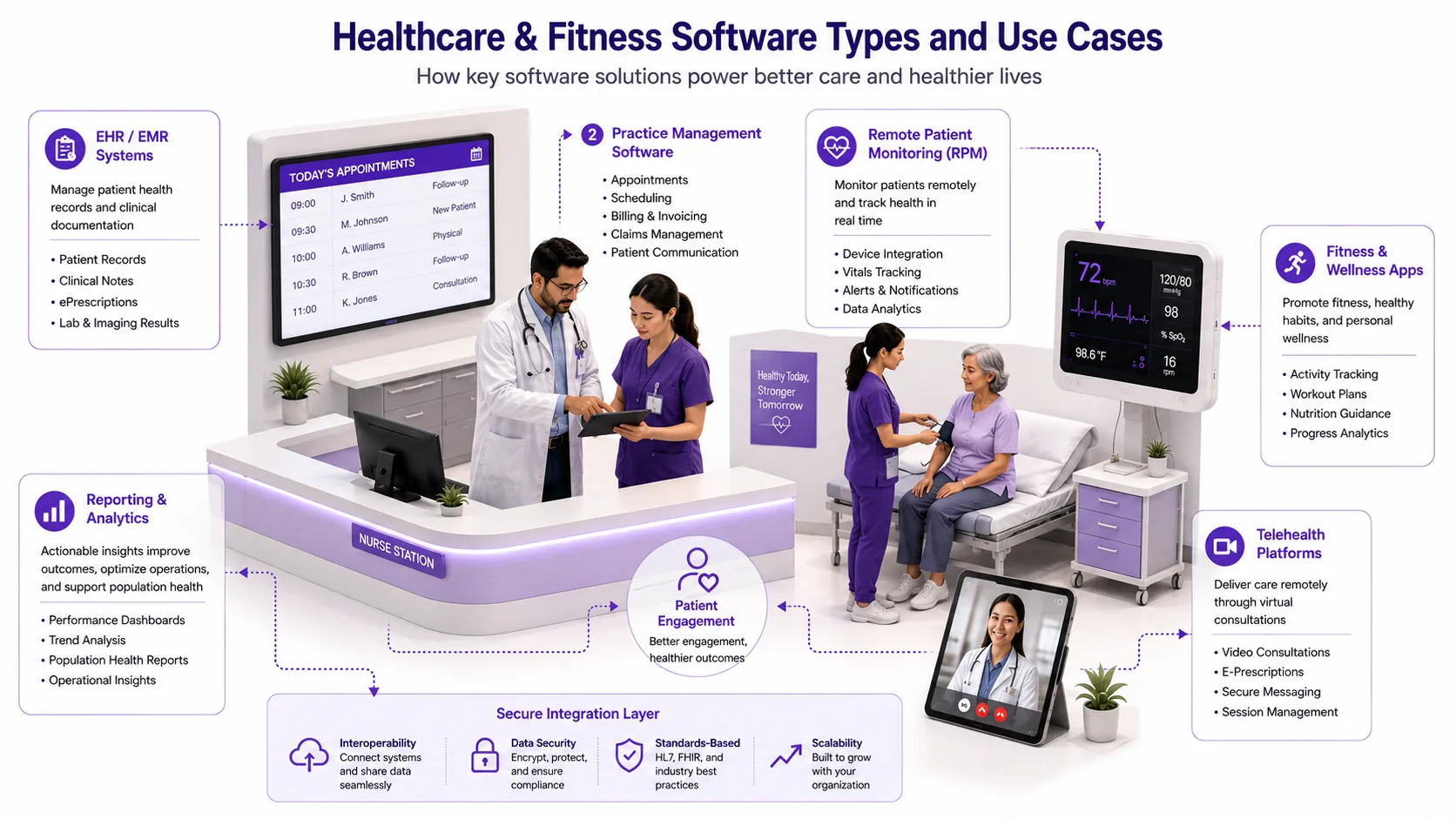
HIPAA compliance is the baseline for any US-facing healthcare app. This means safeguarding all PHI with technical, administrative, and physical controls. On the technical side, your software must include:
- Encryption in transit and at rest: All patient data should be encrypted using strong protocols (TLS 1.2+ for data in motion, AES-256 for storage).
- Access controls: Only authorized users can view or modify PHI. Implement role-based permissions and strong authentication (ideally multi-factor).
- Audit logging: Every access, change, or export of sensitive data must be logged for compliance audits and breach detection.
- Transmission security: APIs and integrations must be secured, with no plaintext data sent over networks.
Beyond HIPAA, you may need to address GDPR (for EU users), CCPA (for California), or other local privacy laws. This means giving users control over their data, supporting consent management, and providing clear privacy policies. For a practical breakdown of HIPAA technical safeguards, see this HIPAA compliance guide.
Security is not a one-time checklist. Regular penetration testing, vulnerability scans, and staff training are essential to keep up with new threats. According to industry guides, many breaches result from misconfigured access or outdated encryption—not just hacking. For founders and product owners, investing in compliance early is far less costly than retrofitting later or facing regulatory fines.
If you are planning a new healthcare or fitness app, prioritize compliance architecture up front. For more on how Prompt Gurru approaches secure builds, see our AI automation and software services or book a discovery call to discuss your requirements.
Core Features for Healthcare and Fitness Apps
To build a healthcare or fitness app that truly delivers value, you need to focus on a set of core features that address both regulatory requirements and real user needs. Whether your product is a telehealth platform, a wellness tracker, or a fitness coaching app, these essentials should be on your roadmap:
- Secure User Authentication: Robust authentication—such as multi-factor login and role-based access—protects sensitive health data and is a must for HIPAA-compliant software. This is the foundation of user trust and regulatory compliance. For details on technical safeguards, see this HIPAA compliance guide.
- Appointment Scheduling and Management: Patients and clients expect to book, reschedule, and manage appointments directly in the app. Automated reminders and calendar sync help reduce no-shows and improve care continuity.
- Telehealth Video and Messaging: Secure video calls and chat enable remote consultations, follow-ups, and ongoing support. For fitness apps, live video coaching and group sessions keep users engaged and accountable. See more about telehealth and wellness app features at Virtuous Techlogic.
- Health Data Tracking and Analytics: Users want to log workouts, track vitals, monitor progress, and visualize trends. In healthcare, this might include medication adherence, symptom tracking, or integration with electronic health records (EHR). In fitness, think activity logs, nutrition, and goal setting. For a breakdown of fitness app tracking, check this fitness app development guide.
- Push Notifications and Engagement Tools: Timely reminders, motivational nudges, and personalized content keep users coming back. In wellness and mental health apps, these features support habit formation and ongoing care plans.
- Integration with Wearables and Third-Party Devices: Syncing with devices like Fitbit, Apple Watch, or glucose monitors allows for real-time data collection and a seamless user experience. This is now expected in both fitness and modern healthcare apps.
- Patient and User Portals: Give users control over their profiles, health records, and privacy settings. Secure messaging, document upload, and access to care plans or workout routines all contribute to a patient-centric or client-centric experience.
For founders and product owners, prioritizing these features ensures your app is not just compliant, but also competitive and genuinely useful. For a deeper dive into fitness app specifics, see our Fitness App Development article, or explore our custom software services to discuss your project needs.
Technology Stack and Architecture Best Practices
Choosing the right technology stack is a make-or-break decision for healthcare and fitness software. Your choices directly impact security, scalability, and how quickly you can adapt to new user needs or compliance rules. For the frontend, Flutter is a top pick for cross-platform mobile apps, letting you ship iOS and Android from a single codebase. React is widely used for responsive web portals, while Angular offers structure and maintainability for complex enterprise dashboards. These frameworks are proven in telehealth, wellness, and patient engagement apps alike (Virtuous Techlogic).
On the backend, FastAPI (Python) is popular for its speed and built-in data validation, making it ideal for secure APIs. Node.js (JavaScript) powers real-time features like chat and activity tracking, while Spring Boot (Java) is trusted in large healthcare systems for its type safety and robust integrations. These backend stacks support HIPAA-compliant workflows and can be tailored for everything from appointment scheduling to remote monitoring (DreamSoft4u).
Cloud infrastructure is now standard. Providers like AWS, Google Cloud, and Azure offer managed services for secure data storage, auto-scaling, and compliance-ready hosting. Using cloud-native databases such as PostgreSQL, MongoDB, or DynamoDB ensures encryption at rest and in transit. For scalability and reliability, microservices architecture is strongly recommended—this lets you isolate critical modules (like authentication or telehealth video) and scale them independently as usage grows (Arkenea).
APIs are the backbone of modern healthcare and fitness platforms. RESTful APIs are the norm, but GraphQL is gaining ground for flexible data queries. Secure API gateways and OAuth2 authentication are essential for protecting patient and user data. Every architecture decision should prioritize security: implement encryption, access controls, audit logging, and regular vulnerability testing as outlined in this HIPAA compliance guide.
By following these best practices, you set your platform up for long-term growth and regulatory peace of mind. For more on how these choices play out in real projects, see our Portfolio case studies or connect with our team via the AI automation services page.
Case Study: Mindway EAP Platform as an Illustrative Example
Building a healthcare or wellness app is more than just coding features. Compliance, user trust, and real engagement are non-negotiable. To show how these principles come together in practice, let’s look at Mindway—a mental wellness and Employee Assistance Program (EAP) platform designed and shipped by Prompt Gurru. See Mindway on Google Play.
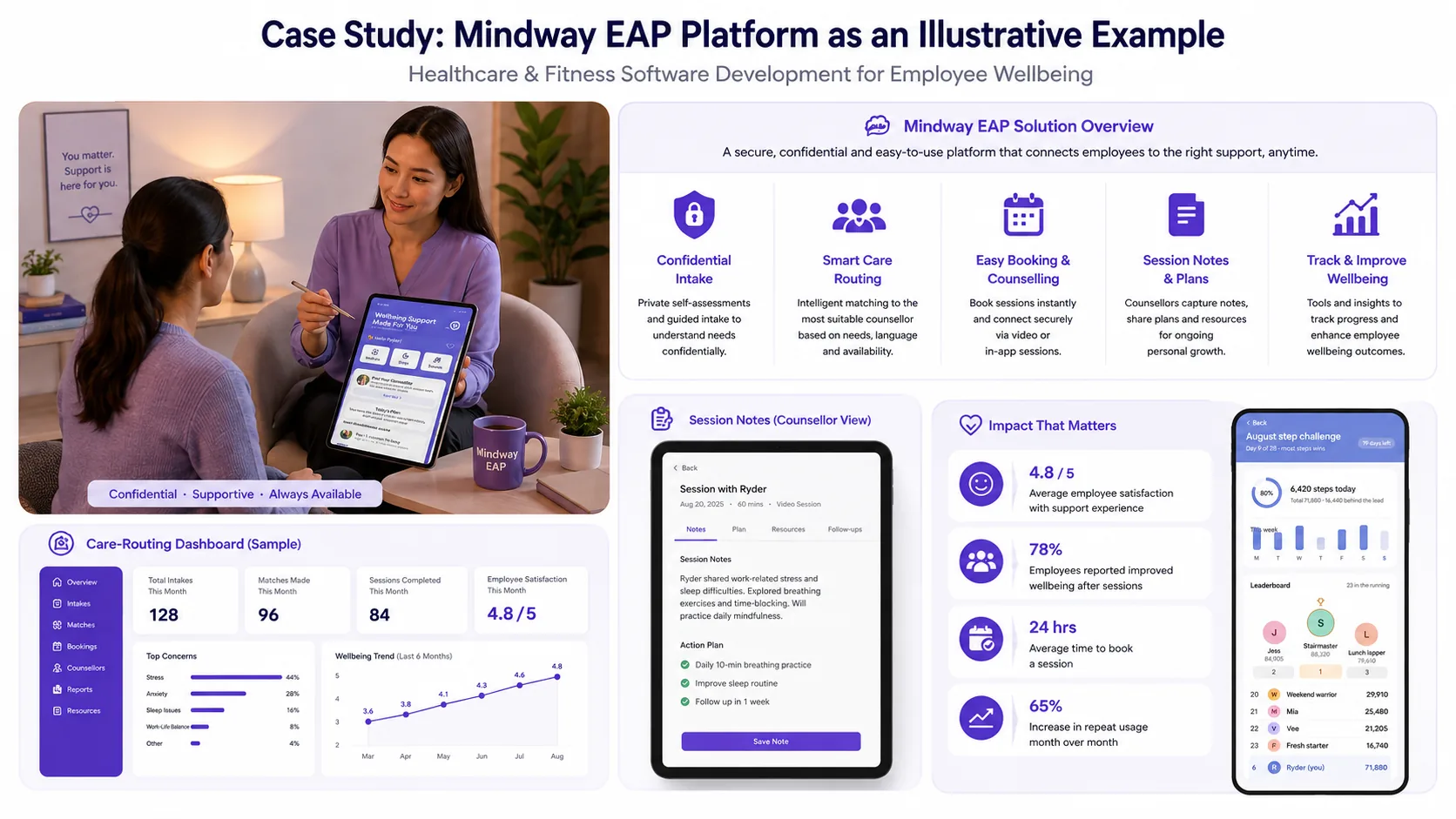
Mindway offers confidential support, guided self-care, and access to licensed professionals—all through a secure, user-friendly mobile app. The platform was built for organizations that want to support employee mental health while meeting strict privacy and security requirements. Mindway’s feature set includes:
- Anonymous intake and confidential chat with counselors
- Self-guided wellness modules and daily check-ins
- Resource library for stress, anxiety, and work-life balance
- Admin dashboard for usage analytics (with no access to personal details)
Compliance was a top priority from day one. The app’s architecture uses encrypted data storage, role-based access controls, and audit logging—reflecting best practices outlined in HIPAA-compliant healthcare app development guides. User data is never shared with employers, and all communication is end-to-end encrypted.
On the technology side, Mindway was built with Flutter for cross-platform delivery (Android and iOS), paired with a scalable backend using Firebase and custom APIs. This stack enables rapid iteration and strong security controls, similar to recommendations in industry guides for healthcare and fitness software.
Since launch, Mindway has helped organizations offer real mental wellness support at scale—without sacrificing privacy or usability. If you’re considering a healthcare or fitness app, Mindway is a practical example of how Prompt Gurru approaches secure, compliant, and user-centric software builds. See more healthcare and wellness projects in our portfolio.
DIY vs Hiring a Custom Software Studio: Pros and Cons
If you are planning to launch a healthcare or fitness app, deciding whether to build in-house or hire a specialist studio is a critical fork in the road. Each path has tradeoffs around compliance, speed, cost, and long-term risk—especially in regulated spaces like healthcare and wellness.
- DIY (In-House) Development: Building with your own team gives you direct control over every feature and workflow. This route can work if you have experienced engineers familiar with healthcare standards, security, and privacy requirements. However, most startups underestimate the complexity of HIPAA compliance, secure data storage, and integration with third-party systems. Even a small oversight can expose you to regulatory penalties or data breaches. In-house builds often stretch timelines and budgets, especially if your team is learning as they go or juggling multiple priorities. According to industry guides, many founders find that initial estimates for healthcare app projects are optimistic, with real-world delivery taking longer and requiring more QA than expected.
- Hiring a Custom Software Studio: Partnering with a studio that specializes in healthcare and fitness software brings deep domain experience, proven compliance workflows, and access to reusable components. Studios like Prompt Gurru have shipped platforms such as Mindway (EAP/wellness), so they know how to navigate HIPAA, secure mobile frameworks, and scalable backends. You get a clear scope, predictable delivery, and a team that can flag regulatory pitfalls early. The main tradeoff is cost—custom studios typically charge premium rates for this expertise, but the investment often pays off in faster launches and lower compliance risk. For a breakdown of what goes into healthcare app costs, see this app development cost guide.
Key Considerations:
- Compliance and Security: DIY teams must build or learn HIPAA-compliant workflows from scratch. Studios bring pre-vetted patterns and audit-ready documentation.
- Speed to Market: Studios can often launch MVPs faster, drawing on prior builds and established QA processes. In-house teams may move slower, especially if hiring or upskilling is needed.
- Cost: DIY may look cheaper upfront but can balloon with delays, rework, or compliance fixes. Studio builds are more predictable but require higher initial investment.
- Long-Term Maintenance: In-house teams own the codebase and can iterate freely. Studios typically offer handoff, training, and optional support retainers.
For most healthcare and wellness startups, the decision comes down to your team’s technical depth, regulatory experience, and appetite for risk. If you want to move quickly and avoid compliance missteps, hiring a specialist studio is often the safer bet. Ready to discuss your project or get a tailored estimate? Contact Prompt Gurru or book a discovery call to explore your options.
Common Challenges and How to Avoid Them
Healthcare and fitness software projects can deliver real impact, but they are also full of hidden risks that can stall progress or lead to costly mistakes. Here are five of the most common challenges—and practical ways to address them before they become blockers:
- Regulatory Compliance Gaps: Missing HIPAA, GDPR, or similar requirements is one of the fastest ways to derail a healthcare app. Start with a compliance checklist and engage legal or compliance advisors early. Use technical safeguards like encryption, access controls, and audit logging as outlined in this HIPAA mobile app guide.
- Data Security Risks: Healthcare and wellness apps handle sensitive data that is a prime target for breaches. Encrypt all data at rest and in transit, enforce strong authentication, and regularly audit access. For a practical overview of secure architecture, see Virtuous Techlogic's industry guide.
- Poor User Adoption: Even the best features will fail if the app is not intuitive or accessible. Healthcare and fitness apps must be easy for all ages and abilities. Run usability tests, simplify onboarding, and deliver clear value from the first use. The DreamSoft4u fitness app guide shares actionable tips for user-centric design.
- Integration Complexity: Connecting with EHRs, wearables, or telehealth platforms is rarely plug-and-play. Plan integrations from day one, choose well-documented APIs, and budget extra time for testing and troubleshooting. Document all third-party dependencies to avoid surprises.
- Scalability and Performance: Early prototypes may work fine with a handful of users, but real-world healthcare and wellness platforms must scale smoothly. Use cloud-native architectures, run load tests, and review backend design to handle spikes in usage. For more on best practices, see Appinventiv's healthcare app guide.
Proactively addressing these challenges can save months of rework and protect your reputation. For a deeper dive into healthcare app best practices, check out our healthcare app development guide or explore our custom software services.
Cost and Timeline Considerations for Development
Budgeting for healthcare and fitness software development is a major concern for founders and product owners. Costs and delivery timelines can swing widely depending on your feature set, compliance needs, and the expertise of your team. Setting clear expectations up front helps you avoid overruns and delays.
Main factors that drive cost and timeline:
- Feature complexity: Simple wellness trackers or appointment schedulers are much faster and less expensive to build than full-featured telehealth platforms, EAPs, or apps with real-time chat and analytics. For a breakdown of fitness app types and their impact on scope, see this fitness app development guide.
- Compliance requirements: HIPAA, GDPR, and other data privacy standards add both engineering effort and cost. Security features like encryption, audit logging, and access controls are non-negotiable for most healthcare apps. See technical safeguards explained here.
- Platform and stack choices: Using cross-platform frameworks like Flutter can speed up delivery for mobile apps, but native integrations or custom device support may increase complexity. Virtuous Techlogic discusses Flutter and scalable backends for healthcare.
- Team expertise: Working with a studio experienced in healthcare and fitness software reduces risk and rework. Look for teams with a portfolio in this space and a clear process for compliance.
- Integrations: Connecting to EHRs, wearables, or third-party APIs adds both time and cost, especially if custom middleware is needed.
Illustrative US market ranges for custom builds:
- MVP wellness or fitness tracker: $60,000 to $120,000, 3 to 6 months
- HIPAA-compliant telehealth or EAP platform: $150,000 to $350,000, 6 to 12 months
- Enterprise-grade multi-platform solution: $300,000 to $600,000+, 9 to 18 months
These figures reflect typical US boutique agency rates ($100 to $200/hr) and include discovery, design, development, testing, and basic training. For a detailed breakdown, see the 2026 healthcare software cost guide.
Ongoing costs—such as cloud hosting, security monitoring, and compliance audits—should be budgeted separately. If you want a tailored estimate or want to see how Prompt Gurru scopes real projects, contact us or browse our portfolio case studies.
Frequently Asked Questions
What is HIPAA compliance and why is it important?
HIPAA compliance means your healthcare software meets the standards set by the Health Insurance Portability and Accountability Act for protecting patient health information. It covers how data is stored, transmitted, and accessed, requiring encryption, audit trails, and strict access controls. HIPAA compliance is essential because it protects patient privacy, builds trust, and helps you avoid legal penalties. For a deeper look at technical safeguards, see this HIPAA mobile app guide.
How long does it take to develop a healthcare app?
Development timelines for healthcare and fitness apps vary based on complexity, features, and compliance needs. A basic MVP can take 3 to 5 months, while a full-featured, HIPAA-compliant platform may require 6 to 12 months or more. Factors like integrations, testing, and regulatory review can extend the timeline. For a breakdown of phases and what impacts delivery, see this healthcare software development guide.
What core features should a fitness app have?
Essential features for fitness app development include user profiles, workout tracking, goal setting, progress analytics, notifications, and integration with wearables or health data sources. Social sharing, video content, and personalized recommendations are also common. For a full list of features and trends, check out this fitness app development guide.
Should I hire a custom software studio or build in-house?
Hiring a custom software studio gives you access to experienced teams who understand healthcare and fitness software development, compliance, and best practices. Building in-house can work if you have a technical team with healthcare experience and time to manage compliance and security. Most startups and wellness providers choose a studio for faster delivery, reduced risk, and access to proven workflows. If you want to discuss your options, contact Prompt Gurru for a discovery call.
What are common security risks in healthcare apps?
Common risks include data breaches, weak authentication, unencrypted data storage, and insecure third-party integrations. Healthcare apps must address these with strong encryption, regular security audits, access controls, and compliance with standards like HIPAA. For more on technical safeguards, see this HIPAA compliance guide. You can also explore our portfolio case studies to see how we address security in real projects.
Conclusion and Next Steps: How to Engage Prompt Gurru for Your Project
Healthcare and fitness software development is a high-stakes field—security, compliance, and user trust are non-negotiable. Throughout this guide, we've shown how building HIPAA-compliant, scalable apps requires more than just coding skills. It demands deep knowledge of privacy regulations, secure architecture patterns, and a product mindset that puts patient and user outcomes first. Industry resources like Virtuous Techlogic and DreamSoft4u reinforce that specialized expertise is essential for success in this space.
If you're ready to bring your healthcare or wellness vision to life, Prompt Gurru is here to help. We've shipped platforms like Mindway (illustrative example) and understand the technical, regulatory, and operational challenges unique to this industry. Our team partners with founders and product leaders to scope, design, and build custom solutions—whether you're launching a telehealth platform, a fitness coaching app, or a wellness engagement tool.
Book a free discovery call to discuss your project, get honest feedback, and see how Prompt Gurru can accelerate your roadmap. Or reach out via our contact form for a quick intro. Let's build something that makes a real difference in healthcare and wellness.
About the author
The Prompt Gurru team specializes in healthcare and fitness software development for startups and SMEs. With over five years of hands-on experience, our studio has shipped more than 50 projects across healthcare, wellness, education, and business operations. We combine expertise in secure mobile and web app development—using frameworks like Flutter and FastAPI—with a strong focus on compliance, patient engagement, and scalable architecture.
Our portfolio includes the Mindway EAP platform (mental wellness and employee assistance), as well as solutions for HRM, e-commerce, and education. We work closely with founders and product owners to deliver HIPAA-compliant, user-friendly software that meets real-world needs. See more of our work in the Portfolio case studies or contact us to discuss your healthcare or fitness product idea. Learn more about our approach at promptgurru.com.
Additional Resources
- Healthcare & Fitness Software Development | Virtuous Techlogic – Overview of healthcare and fitness platforms, including telehealth and wellness apps built with Flutter and scalable backends.
- Fitness App Development: A Complete Guide (2026) – DreamSoft4u – In-depth guide covering fitness app types, benefits, and development steps.
- Healthcare Software Development: The Complete 2026 Guide (Cost, Timeline, HIPAA) – Arkenea – Detailed breakdown of healthcare software requirements, compliance, and project planning.
- The Essential Guide to Healthcare Mobile App Development – Appinventiv – Explains medical and wellness app features, compliance, and user experience best practices.
- Healthcare mobile app development guide: from idea to a HIPAA-compliant product – AgileEngine – Focus on HIPAA safeguards and technical security for healthcare apps.
- More blog articles – Explore practical guides on software development, automation, and product strategy.
- Portfolio case studies – See shipped healthcare and wellness platforms, including Mindway EAP (mental wellness app).
- AI automation services – Learn how Prompt Gurru supports healthcare and fitness startups with secure, scalable builds.
- Contact Prompt Gurru – Start a conversation about your healthcare or fitness software project.
- Book a free discovery call – Get expert input on your requirements and next steps.
Ready to automate your business?
We build n8n workflows, AI pipelines, Flutter apps, and custom software for startups and SMEs - like the system that powers this blog.
Book a free discovery call